MAGI-2 Review: Price, Specs and Test vs Seedance 2.5, Kling 4, Gemini Omni
Same prompts, 8 seconds, 1080p and audio for every model: uncurated clips, an honest look at picture quality, credit prices and a how-to
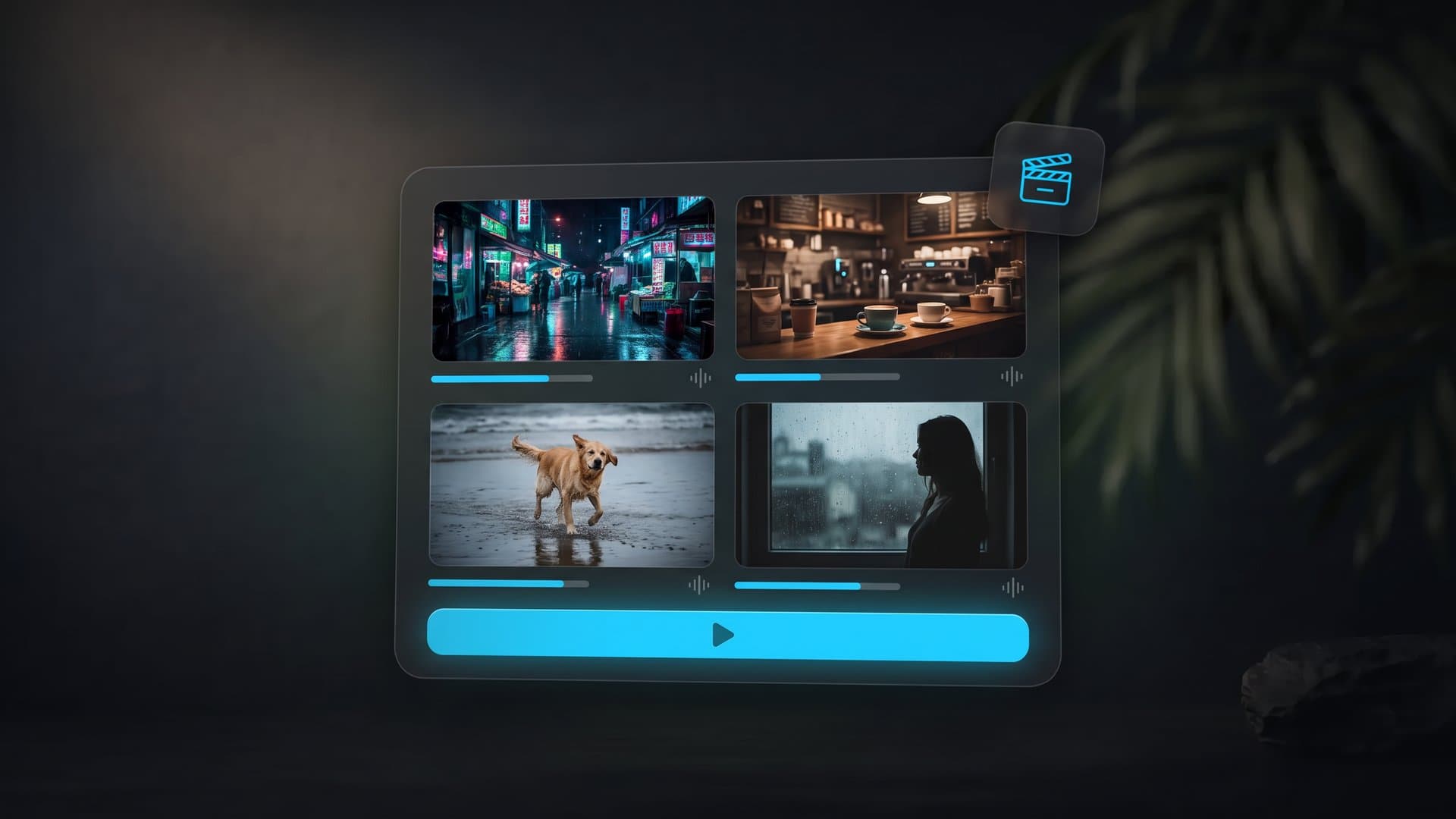
MAGI-2 is a video model from the Chinese company Sand AI, released on November 24, 2026: it renders a 4- to 30-second clip in a single generation, in 1080p only, with sound built in — dialogue with lip-sync, sound effects and music. On Clipia, one second of MAGI-2 costs 3.5 credits as of November 28, 2026: 8 seconds is 28 credits, 30 seconds is 105. We ran it on four identical prompts against Seedance 2.5, Kling 4.0 and Gemini Omni 1.2 with exactly the same settings — 8 seconds, 1080p, 16:9, sound on — and every clip is shown below, uncurated.
The short verdict: MAGI-2 did not take first place in any of the four tests. It follows a multi-shot script closely and delivers dialogue word for word with moving lips — even in Russian. But its picture is oversaturated and looks digital, and the clips have visible slips: legible lettering where we asked for “no text”, a face that drifts when animating a photo, water and fur that look painted. On image quality, MAGI-2 is not in the same league as Seedance 2.5. Its strength is price: 8 seconds of MAGI-2 costs 28 credits, 9 times less than Seedance 2.5 and 6 times less than Kling 4.0, and MAGI-2 renders 30 seconds in one pass for 105 credits. The best value in the test came from Gemini Omni 1.2: 48 credits for 8 seconds, two first places and two seconds.
MAGI-2 at a glance (as of November 28, 2026)
- Developer: Sand AI, founded by Cao Yue, a co-author of the Swin Transformer. The company's previous model is the open-source MAGI-1 (April 2025).
- Length: 4 to 30 seconds, any whole number of seconds, one pass with no stitching.
- Resolution: 1080p only — there is no cheaper 480p or 720p draft mode.
- Audio: generated together with the picture: speech with lip-sync, sound effects, ambience and music. You can switch it off; the price stays the same.
- Aspect ratios: 16:9, 9:16, 1:1, 4:3, 3:4 and 21:9.
- Modes: text to video; first frame (plus an optional last frame); references — up to 10 images, 5 videos and 5 audio files.
- Price on Clipia: 3.5 credits per second; audio and aspect ratio do not change it (as of November 28, 2026).
- Where to try it: in the Clipia video studio with MAGI-2 preselected, or via the API and MCP.
What is MAGI-2?
MAGI-2 (also written MAGI 2 or Magi-2) is an AI video generator: a generative model that turns text and images into video with sound. You give it a scene description (and, if you want, frames or reference files) and get back a finished MP4: several shots, camera changes that follow your script, dialogue and an ambient soundtrack in a single audio track. No separate voice-over, no manual cuts, no music to lay in afterwards.
According to Sand AI's launch post, MAGI-2 is a single transformer that processes text, video and audio as one shared data stream, built as a mixture of experts. Sand AI states 480 billion parameters, about 28 billion of them active per step; one of the launch announcements quotes a different figure, 400 billion, and nobody has officially explained the gap. Neither number can be verified independently, because the flagship weights are not public.
One detail that most pages in search results get wrong: MAGI-2 and MAGI-2 Preview are different models. Preview came out in August 2026 with open weights and makes clips of up to 10 seconds. The flagship MAGI-2 from November 24 is available only through services and the API. Sand AI says it will open-source it too, but gives no date or license.
| Spec | MAGI-2 (Nov 24, 2026) | MAGI-2 Preview (Aug 2026) |
|---|---|---|
| Access | Services and API, no weights | Open weights, Apache 2.0 |
| Size (per Sand AI) | 480B parameters, ≈28B active | 114B parameters, 6B active |
| Length | 4–30 seconds | up to 10 seconds |
| Run it yourself | Not possible | Needs a server with 8 Hopper-class GPUs, ≈307 GB of weights |
The new model differs from MAGI-1 in more than scale. MAGI-1 generated video autoregressively, in 24-frame chunks one after another. Sand AI says MAGI-2 drops that chunking: the clip is built as a whole rather than in consecutive chunks.
Who is Sand AI?
Sand AI is a Chinese video-generation startup. Its founder, Cao Yue, is a Marr Prize winner and one of the authors of the Swin Transformer who previously worked at Microsoft Research Asia. In April 2025 the company released MAGI-1, an open autoregressive video model with 24 billion parameters. MAGI-2 is its first closed flagship; it launched on November 24, 2026 and reached third-party services, including Clipia, within a couple of days.
MAGI-2 specs
| Spec | Value | Notes |
|---|---|---|
| Length | 4–30 seconds | Whole seconds, one pass |
| Resolution | 1080p | 16:9 is 1920×1080, 9:16 is 1080×1920 |
| Frame rate | 25 fps | Sand AI states 25 fps |
| Aspect ratios | 16:9, 9:16, 1:1, 4:3, 3:4, 21:9 | From a first frame, the source ratio can be kept |
| Audio | Speech, sound effects, ambience, music | On by default; turning it off does not change the price |
| Shots | Several shots in one clip | Cuts and angles are set in the prompt |
| First and last frame | Yes | Last frame is optional |
| References | Up to 10 images, 5 videos, 5 audio files | Video and audio 2–30 seconds each, 30 seconds combined; audio only together with an image or video |
| Prompt | Up to 15,000 characters | Enough for a multi-shot script with dialogue |
| Frames + references in one request | No | Either frames or references |
How much does MAGI-2 cost?
On Clipia, MAGI-2 costs 3.5 credits per second of finished video as of November 28, 2026. The price depends only on length: audio, aspect ratio, mode and references do not change it, and the seconds of reference video and audio are not billed.
| Length | Price on Clipia, 1080p |
|---|---|
| 4 seconds | 14 credits |
| 5 seconds | 18 credits |
| 8 seconds | 28 credits |
| 10 seconds | 35 credits |
| 15 seconds | 53 credits |
| 20 seconds | 70 credits |
| 30 seconds | 105 credits |
For comparison, here is what clips with the same settings cost for the models in our test — all 1080p with audio, as of November 28, 2026. These are the amounts the studio actually charges, with no hidden audio surcharge.
| Model | 5 seconds | 8 seconds | 10 seconds | 30 seconds | Max per clip |
|---|---|---|---|---|---|
| MAGI-2 | 18 credits | 28 credits | 35 credits | 105 credits | 30 seconds |
| Seedance 2.5 | 157 credits | 250 credits | 313 credits | 938 credits | 30 seconds in the studio |
| Kling 4.0 | 110 credits | 176 credits | 220 credits | 660 credits | 30 seconds in the studio |
| Gemini Omni 1.2 | 30 credits | 48 credits | 60 credits | — | 15 seconds |
The price takeaway is simple: in 1080p, MAGI-2 is the cheapest model in our test. Eight seconds costs 28 credits, versus 48 for Gemini Omni 1.2, 176 for Kling 4.0 and 250 for Seedance 2.5. The gap grows on long clips: 30 seconds of MAGI-2 costs 105 credits, while Gemini Omni 1.2 cannot go past 15 seconds in one clip.
The flip side is that MAGI-2 has no 480p or 720p mode. A draft costs as much as a final render, so test ideas on 4–5 seconds (14–18 credits) and launch the long clip once the prompt works.
How we tested
Almost every MAGI-2 comparison in search results is published by a site that sells access to the model, and pits MAGI-2 in 1080p against competitors in 480p or 720p. We did the opposite and equalized everything we could:
- Date: the MAGI-2, Seedance 2.5 and Kling 4.0 clips were made on November 27, 2026, and the Gemini Omni 1.2 clips on November 28, 2026, with the same prompts and settings. Every clip was generated on Clipia.
- Settings: 8 seconds, 1080p, 16:9, audio on for every model. Eight seconds is a length all four models support.
- Prompt: the same English prompt for every model, quoted in full below each test.
- One take: each model got exactly one generation per prompt — no rerolls, no picking the best take.
- What we measured: prompt adherence, image quality (realism, light, colour), motion and physics, faces and hands, cuts, audio and lip-sync, artifacts, time from launch to finished file, and price per clip. Resolution, length, frame rate and the audio track were checked on the files with ffprobe; speech was transcribed with Whisper. The six MAGI-2 clips started at the same time and waited in a shared queue, so their times in the test are inflated: a single 4-second clip takes about 3 minutes.
The rivals: Seedance 2.5 from ByteDance, Kling 4.0 from Kuaishou and Gemini Omni 1.2 from Google. All three generate audio together with the video and output 1080p.
Test 1. A three-shot cinematic scene with sound
This is the job people buy MAGI-2 for: can it fit three shots with hard cuts into 8 seconds, keep the rain and neon, and score the scene? Prompt:
Cinematic night-market scene in the rain, three shots joined by hard cuts. Shot 1, wide: a crowded street-food market at night, neon signs reflecting in puddles, people with umbrellas walking past steaming stalls. Hard cut. Shot 2, close-up: a cook tosses noodles in a flaming wok, sparks and steam rising into the rain. Hard cut. Shot 3, medium: a young woman under a clear umbrella takes the first bite of noodles and smiles. Sound: heavy rain on tarps, sizzling wok, crowd chatter, distant upbeat music. No text, no logos, no subtitles.
MAGI-2 — 28 credits, ready in 15 min 19 s.
Seedance 2.5 — 250 credits, 5 min 37 s.
Kling 4.0 — 176 credits, 15 min 28 s.
Gemini Omni 1.2 — 48 credits, 1 min 56 s.
What we got
- MAGI-2 ticked every box in the script: three shots with cuts at 2.4 and 5.0 seconds, a wok close-up with flames, the clear umbrella, the closing smile. But the picture gives the AI away at once: oversaturated colour, too much sharpening, a glossy look to everything. The rain is barely visible in the wide shot and few people carry umbrellas. The signs show large, legible Chinese characters even though the prompt said “no text”. And the model took the “sparks” literally: bits of noodle fly around the wok and lie all over the stove.
- Seedance 2.5 made the best clip of this test. Three shots (cuts at 2.9 and 5.4 seconds), each one like a frame from a film: dense rain, neon reflected in the wet asphalt, shallow depth of field, backlight in the steam. The noodles fly above the flame, and the woman under a clear bubble umbrella smiles. The signs carry pseudo-lettering.
- Kling 4.0 also produced three shots (cuts at 3.0 and 5.8 seconds). The picture looks more natural than MAGI-2's and the atmosphere is good. But the cook is framed in a medium shot rather than a close-up, and he mostly swings the wok in the steam; there is hardly any noodle toss.
- Gemini Omni 1.2 made three evenly paced shots (cuts at 2.5 and 5.1 seconds). The look is realistic, almost documentary: plenty of umbrellas, coloured reflections on the asphalt, a wok close-up with flames and tossed noodles. The woman in a knit hat eats under a clear umbrella and smiles at the end. It is less striking than Seedance 2.5 — the rain itself barely shows in the wide shot. The signs carry Chinese characters too, though smaller than MAGI-2's. We found no other slips.
Verdict: Seedance 2.5 wins clearly on picture quality. Gemini Omni 1.2 is second while costing 5 times less than Seedance. MAGI-2 followed the script, but on image quality it is not in Seedance 2.5's league; it shares third and fourth place with Kling 4.0. If legible lettering must stay out of frame, ask MAGI-2 explicitly for “signs without letters”.
Test 2. Two-character dialogue and lip-sync
The hardest job for audio-capable models: two lines from two different people, each with lips moving in time with their own words. Prompt:
Medium two-shot in a cozy café at golden hour, warm window light, shallow depth of field. A young barista with curly red hair hands a cup across the wooden counter to an elderly man in a tweed jacket. The barista says cheerfully: “One flat white, extra hot.” The man smiles and answers: “You remembered. Thank you.” Natural lip sync, small hand gestures. Sound: espresso machine hiss, quiet café chatter, cups clinking. No text, no subtitles, no logos.
MAGI-2 — 28 credits, 15 min 43 s.
Seedance 2.5 — 250 credits, 3 min 2 s.
Kling 4.0 — 176 credits, 5 min 22 s.
Gemini Omni 1.2 — 48 credits, 1 min 58 s.
What we got
We transcribed the speech with Whisper, compared it with the prompt, and checked the lips on frames taken while each line is spoken. All four models delivered both lines word for word and by the right speaker, and in every clip the lips move on whoever is talking. The difference is in the picture and the framing.
- MAGI-2 got the job done: the barista speaks at 1.3–3.2 seconds, the man at 4.3–6.6, the lips move by speaker, the cup passes from hand to hand, and both characters stay stable to the end. But the picture is flat and looks like a stock ad: oversaturated colour and a static camera. The window carries mirrored pseudo-lettering even though the prompt said “no text”.
- Seedance 2.5 has the most cinematic picture of the test: backlight, haze, texture. The lines land at 1.8–3.8 and 5.4–8.0 seconds, with lips in sync for both — the barista says her line on camera. The weak point is framing: the camera pushes in on the man, and the barista leaves the frame during his reply, so the two-shot is lost. The model also gave the man a newspaper that was not in the prompt.
- Kling 4.0 is word-perfect, with both lines inside 0.2–5.5 seconds; the lips move by speaker and the cup changes hands. The picture is even and calm, and the man is shot in profile. The menu on the wall carries pseudo-text.
- Gemini Omni 1.2 follows the prompt most closely: the two-shot holds for all 8 seconds, with warm window light and shallow depth of field. The cup is handed across the counter and the barista makes a small hand gesture, as asked. The lines land at 1.3–3.3 and 4.1–6.2 seconds. On its own initiative, the model gave the man glasses and a beard.
Verdict: speech is MAGI-2's strong suit: here it keeps up with Seedance 2.5 and Kling 4.0, which cost 6 to 9 times more. But on the picture, Gemini Omni 1.2 and Seedance 2.5 take the top two places, while MAGI-2 and Kling 4.0 share third and fourth.
Test 3. Physics: a wet dog shaking off on the beach
Water, fur, backlight and slow motion — a classic stress test for video models. Prompt:
Slow-motion close-up on a sunny beach: a soaking-wet golden retriever shakes its whole body, thousands of water droplets fly off its fur and sparkle in the backlight, ears flapping. Then the dog runs toward the camera through shallow waves, water splashing around its paws. Sound: waves, splashing water, the jingle of a collar, one happy bark. No text, no people.
MAGI-2 — 28 credits, 15 min 50 s.
Seedance 2.5 — 250 credits, 6 min 36 s.
Kling 4.0 — 176 credits, 6 min 14 s.
Gemini Omni 1.2 — 48 credits, 3 min 28 s.
What we got
- MAGI-2 has the weakest picture here: the dog and the waves look like computer graphics. The colours are oversaturated, the fur sticks out in painted-looking strands, and the droplets look like white dots. There is no slow motion, the sun is in front of the dog rather than behind it, and the shake is just a quick turn of the head. The second shot — the run with splashes after the cut at 4.3 seconds — came out better.
- Seedance 2.5 made the best clip of this test: real slow motion, golden hour and backlight, ears flapping, droplets sparkling against the light. Then the camera whips round and the dog runs through the shallows with splashes. It looks like live footage.
- Kling 4.0 smeared the shake with motion blur, and the dog's coat changes colour between the two shots (cut at 3.0 seconds). No backlight.
- Gemini Omni 1.2 made one continuous shot with no cut. The fur looks convincingly wet; the dog shakes off — ears flapping, droplets flying — then runs toward the camera through shallow water with splashes at its paws. Very natural, no artifacts. What it lacks is backlight and a clear slow-motion effect.
Verdict: Seedance 2.5 is clearly the strongest, with Gemini Omni 1.2 second. MAGI-2 and Kling 4.0 did not manage the task, and MAGI-2's picture is the least natural of all.
Test 4. Image to video from the same first frame
Every model received the same photo (a woman in a Paris café) as the first frame. We checked whether the face survives, whether the chain of actions happens, and whether the character speaks. Prompt:
The woman laughs, then picks up the coffee cup, takes a small sip and puts it back on the saucer. She turns to the rainy window and says softly: “Paris in the rain is still Paris.” Raindrops roll down the glass, the camera slowly pushes in. Sound: rain on the window, quiet café chatter, a cup clinking on the saucer, soft accordion music. No text, no subtitles.
MAGI-2 — 28 credits, 16 min 0 s.
Seedance 2.5 — 250 credits, 2 min 34 s.
Kling 4.0 — 176 credits, 5 min 37 s.
Gemini Omni 1.2 — 48 credits, 2 min 11 s.
What we got
- MAGI-2 completed the chain: laugh, sip, cup back on the saucer, turn to the window. The line lands at 4.8–7.0 seconds with clear articulation, the clip is 16:9, and a passer-by with an umbrella appears outside the glass. But the face drifts: by the end she looks noticeably older and sharper-featured than in the photo. For a photo of a specific person, that is a serious drawback.
- Seedance 2.5 treated the source most gently: the face and the framing stay the same, the movement is the most natural, and the chain of actions happens. But the line (5.6–7.5 seconds) comes after she has turned to the window, and her lips are barely visible — it plays like a voice-over. It ignored the 16:9 setting: the clip is 1742×1192, like the photo.
- Kling 4.0 changes the face by the middle of the clip — a different face shape. The line comes only in the last two seconds (6.1–7.7) with weak articulation. On the plus side, the rain streaks on the glass are the most visible. Kling does not take an aspect ratio in image mode: the clip is 1740×1188, like the source.
- Gemini Omni 1.2 completed the whole chain: laugh, sip, cup on the saucer, turn to the window. The line lands at 4.9–6.8 seconds, with her lips moving in sync in profile. The camera pushes in slowly, there are raindrops on the glass, the face is preserved, and the clip is 16:9 as requested.
Verdict: Gemini Omni 1.2 is the only model that kept the face, the aspect ratio and the lip-sync at the same time. Seedance 2.5 is second, MAGI-2 third and Kling 4.0 fourth. On the independent Artificial Analysis leaderboard, MAGI-2 ranked first in image-to-video with audio on November 26, but in our single take it came third.
Test 5. Can MAGI-2 speak Russian?
MAGI-2 has no official list of languages, and every review in search results tests English speech only. We gave the model a short line in Russian. Prompt:
Medium close-up in a bright modern kitchen, morning light. A young woman in a grey sweater looks into the camera and says in Russian, calmly and clearly: «Доброе утро! Сегодня покажу, как приготовить идеальный омлет.» She smiles and picks up a whisk. Natural lip sync. Sound: soft kitchen ambience, birds outside. No text, no subtitles.
MAGI-2 — 28 credits, 15 min 21 s.
The result beat our expectations: Whisper detected the language as Russian on its own and transcribed the line word for word (“Good morning! Today I'll show you how to make the perfect omelette”). The line fits into the first 4.5 seconds, the lips move in time, and afterwards she smiles and picks up the whisk as asked. This is one attempt, not a guarantee for any sentence: test long lines and rare words on a short clip first.
Comparison results
Summary of the four tests with identical settings (8 seconds, 1080p, 16:9, audio; one take per model, November 27–28, 2026). Rankings are our assessment of the clips above: we scored both how well the prompt was followed and the quality of the picture itself.
| Criterion | MAGI-2 | Seedance 2.5 | Kling 4.0 | Gemini Omni 1.2 |
|---|---|---|---|---|
| Test 1: three shots with sound | 3rd–4th | 1st | 3rd–4th | 2nd |
| Test 2: dialogue and lips | 3rd–4th | 2nd | 3rd–4th | 1st |
| Test 3: water physics | 3rd–4th | 1st | 3rd–4th | 2nd |
| Test 4: image to video | 3rd | 2nd | 4th | 1st |
| Picture | Bright, oversaturated, digital-looking | Cinematic, best in the test | Calm, realistic | Realistic, natural |
| Lines word for word (Whisper) | 3 of 3 | 3 of 3 | 3 of 3 | 3 of 3 |
| File | 1920×1080, 25 fps | 1920×1080, 24 fps ¹ | 1920×1080, 24 fps ¹ | 1920×1080, 24 fps |
| File length | 8.01 s | 8.06 s | 8.04 s | 7.94 s |
| Render time, 8 s | 15–16 min ² | 2.5–6.5 min | 5.5–15.5 min | 2–3.5 min |
| Max clip length | 30 s | 30 s | 30 s | 15 s |
| Price of an 8 s clip | 28 credits | 250 credits | 176 credits | 48 credits |
¹ In image mode, Seedance 2.5 and Kling 4.0 kept the source proportions (1742×1192 and 1740×1188) instead of the requested 16:9. Prices and max lengths are as of November 28, 2026. Render time was measured from launch to finished file.
² We launched all six MAGI-2 clips (five 8-second clips and one 30-second clip) at the same time, while Seedance 2.5 and Kling 4.0 had one job per model, so the MAGI-2 times in the test include queueing. A single MAGI-2 run on Clipia on November 26, 2026 took about 3 minutes for a 4-second 1080p clip in each of the three modes. The four Gemini Omni 1.2 clips were also launched at the same time, on November 28.
Every clip has a stereo track. We compared speech by transcript and frames, but did not score sound effects and music: that is largely a matter of taste, so listen for yourself.
Which to pick: MAGI-2, Seedance 2.5, Kling 4.0 or Gemini Omni 1.2
| Task | Pick | Why |
|---|---|---|
| The cheapest video with sound: drafts, storyboards, testing an idea | MAGI-2 | 28 credits for 8 seconds; follows multi-shot scripts and dialogue closely |
| A long talking clip of 16–30 seconds in one pass on a small budget | MAGI-2 | 30 seconds for 105 credits, versus 660 on Kling 4.0 and 938 on Seedance 2.5 |
| Ads, showcase clips, a cinematic look, water and complex physics | Seedance 2.5 | Best picture in the test and first place in the multi-shot scene and water physics; offers 480p and 720p for drafts |
| Best value for clips up to 15 seconds; dialogue; animating a photo with speech | Gemini Omni 1.2 | 48 credits for 8 seconds; first in dialogue and image-to-video, second in the other two tests |
| A long clip with sound for less than Seedance 2.5 | Kling 4.0 | 30 seconds for 660 credits versus 938; calm, realistic picture, but no wins in our test |
A 30-second clip in one pass
MAGI-2's main asset is length: up to 30 seconds in one run. We checked it with a separate four-shot clip with dialogue. Prompt:
A 30-second cinematic short in one generation, several shots with hard cuts. Shot 1: dawn over a misty mountain lake, a wooden rowing boat glides out from the reeds. Shot 2: close-up of an old fisherman's weathered hands untangling a net, water dripping. Shot 3: his granddaughter, about ten, sits at the bow and points at a heron taking off. She asks: “Will it come back tomorrow?” He smiles: “It always does.” Shot 4: wide aerial view, the boat small on the glassy water as the sun breaks through the fog. Sound: oars dipping, birds, wind over water, gentle piano and strings. No text, no subtitles, no logos.
MAGI-2, 30 seconds — 105 credits, ready in 39 min 21 s.
The file is exactly 30.0 seconds, 1920×1080, 25 fps, with stereo sound. All four shots are there, with cuts at 5.8, 9.5 and 19.1 seconds. The fisherman in his hat and the girl in the pink sweater stay the same from shot to shot, and at the end the sun breaks through the fog. Whisper transcribed the dialogue word for word: the girl's question at 13.1 seconds, the fisherman's answer at 14.6–16.6. The longest shot (9.5 to 19.1 seconds) holds the scene for almost 10 seconds without falling apart. The render took almost 40 minutes, but this clip was queued together with the five other MAGI-2 clips from the test.
It is not free of slips, though. The heron sits on the bow next to the girl and flies off in the third shot, around 10–11 seconds. After the cut at 19.1 seconds it is back on the bow and takes off a second time — a continuity error. The picture has the same postcard-like, oversaturated look as in the short tests.
For comparison, Seedance 2.5 and Kling 4.0 can also make clips of up to 30 seconds, but such a clip in 1080p costs 938 and 660 credits there. Gemini Omni 1.2 tops out at 15 seconds per clip (as of November 28, 2026). For a long talking clip where budget matters more than the picture, MAGI-2 is 6 to 9 times cheaper than the rivals.
How to make a MAGI-2 video on Clipia
Going from sign-up to your first clip takes a couple of minutes.
- Open the studio. Go to the video studio with MAGI-2 preselected — the model is already set in the form.
- Pick a mode. Text to video for a scene from scratch. Image to video for a first frame and, if needed, a last one. References for a character, object, camera move or voice from your own files.
- Write the prompt shot by shot. List the shots, put “hard cut” between them, quote the dialogue, and add the sound on its own line. A template is below.
- Set the parameters. Length from 4 to 30 seconds, aspect ratio (16:9 for YouTube, 9:16 for Reels and Shorts), audio left on. There is no resolution to pick: it is always 1080p.
- Check the price and launch. The credit cost is shown on the button before anything is charged: 3.5 credits per second as of November 28, 2026.
- Download the result. The finished MP4 with audio lands in your history; download it or continue with a new clip.
For a first test, use 5 seconds: it costs 18 credits and immediately shows whether the model understands your scene. The 5 welcome credits you get at sign-up are not enough for that, so you will need to top up.
How to write a MAGI-2 prompt
MAGI-2 reads a prompt like a screenplay. The structure that works best is “style → shots in order → dialogue → sound → exclusions”. Five rules we took away from the tests:
- Write shot by shot. “Shot 1, wide… Hard cut. Shot 2, close-up…” Without explicit cuts the model stretches one action over the whole clip.
- Match the number of shots to the length. Two or three shots for 8 seconds, four to six for 30. Five shots in eight seconds turn into flicker.
- Quote dialogue verbatim. Say who speaks and how: “quietly”, “with a smile”. A short line syncs better than a long one.
- Put sound on its own line. List effects and music: the model builds audio from the text, and sound you don't describe is often random.
- Put exclusions last. “No text, no logos, no subtitles” reduces the odds of garbled lettering, but does not rule it out: in our tests MAGI-2 still drew Chinese characters on the signs. If lettering matters, say it outright: “signs without letters”.
A template you can copy and adapt to your scene:
Cinematic scene, three shots joined by hard cuts. Shot 1, wide: [place, time of day, weather, what is happening]. Hard cut. Shot 2, close-up: [detail of the action]. Hard cut. Shot 3, medium: [character and emotion; quoted line if needed]. Sound: [ambience, action sounds, music]. No text, no logos, no subtitles.
Image to video and references
Besides text, MAGI-2 accepts two kinds of source material — but not both at once:
- First and last frame. Upload a photo and the model continues it with motion and sound. The last frame sets the picture the scene must arrive at: handy for a before-and-after transition or a product that has to end up at a specific angle. The clip keeps the source aspect ratio by default.
- References. Up to 10 images, 5 videos and 5 audio files per request. In the prompt, give each file a role: the character from the image, the camera move from the video, the voice from the audio. Audio works only together with an image or video.
If you simply want to bring a photo to life without choosing a model, use the Animate photo tab.
MAGI-2 limitations
- 1080p only. No cheap draft mode and no 4K. If a site offers MAGI-2 in 4K, that is an upscale on top of 1080p.
- Picture. Oversaturated colour and too much sharpening make the frame look AI-generated. In tests 1–3 this is the main way MAGI-2 falls behind Seedance 2.5 and Gemini Omni 1.2.
- Lettering. Even with “no text” in the prompt, legible Chinese characters appeared on the signs and mirrored pseudo-lettering on the café window.
- Faces when animating a photo. In test 4 the face drifted: by the end she looked older and sharper-featured than in the source photo.
- Continuity in long clips. In the 30-second clip the heron takes off twice: after a cut it is back on the bow of the boat.
- Fast motion. Sand AI itself mentions artifacts in fast movement. In our dog test there was no slow motion and no backlight, and the water and fur looked painted.
- Speech languages. There is no official list of supported languages. In our test it delivered a Russian line word for word, but that was a single attempt — test long lines on a short clip first.
- 2D animation and layered sound. According to the developer, hand-drawn animation and complex soundscapes with many sources are still weaker than realistic video.
- Generation is probabilistic. The same prompt gives different takes. Budget two or three attempts for an important clip.
MAGI-2 via API and MCP
MAGI-2 is available in the Clipia public API under three IDs: magi-2 (text), magi-2-i2v (frames) and magi-2-r2v (references). Parameters, limits and request examples are in the MAGI-2 API docs. Through the Clipia MCP server, you can call the model from Claude, Cursor and other AI assistants with the same parameters.
Frequently asked questions
What is MAGI-2 and who made it?
MAGI-2 is a video model from the Chinese company Sand AI, released on November 24, 2026. It creates a 4- to 30-second clip in 1080p with sound in one generation: several shots, speech with lip-sync, sound effects and music. Sand AI's founder is Cao Yue, one of the authors of the Swin Transformer architecture.
How is MAGI-2 different from MAGI-2 Preview?
Preview is an open model from August 2026 with 114 billion parameters, clips of up to 10 seconds and weights on Hugging Face under Apache 2.0. MAGI-2 is the flagship released on November 24: 480 billion parameters according to Sand AI, clips of up to 30 seconds in 1080p with audio, available only through services and the API.
How much does MAGI-2 cost?
On Clipia it costs 3.5 credits per second as of November 28, 2026: 4 seconds is 14 credits, 8 seconds 28, 10 seconds 35 and 30 seconds 105. Audio and aspect ratio do not change the price. The exact amount is shown in the studio before you launch.
Does MAGI-2 support 720p or 4K?
No. The model outputs 1080p only — there are no other resolutions in the official API or on Clipia. A “4K” label on a service means the finished 1080p clip was upscaled.
Can MAGI-2 speak languages other than English?
Sand AI publishes no official language list. In our test on November 27, 2026, MAGI-2 delivered a Russian line (“Good morning! Today I'll show you how to make the perfect omelette”) word for word on the first try, with lips moving in time. For long lines and rare words, run a 4–5 second test first.
Is MAGI-2 open source? Can I run it locally?
The flagship MAGI-2 is closed: the weights are not published, and Sand AI promises to release them without a date. Only MAGI-2 Preview (114 billion parameters) is open, and it needs a server with eight Hopper-class GPUs and about 307 GB for the weights — it will not run on a home computer.
Is MAGI-2 better than Seedance 2.5 and Kling 4.0?
Not on picture quality. In our same-prompt test MAGI-2 did not take a single first place: Seedance 2.5 won the multi-shot scene and water physics, and Gemini Omni 1.2 won dialogue and image-to-video. MAGI-2's picture is oversaturated and digital-looking, with slips in lettering and faces. On the other hand, it follows the script closely, delivers dialogue word for word and is the cheapest: 28 credits for 8 seconds in 1080p, versus 48 for Gemini Omni 1.2, 176 for Kling 4.0 and 250 for Seedance 2.5 (as of November 28, 2026).
MAGI-2 or Gemini Omni 1.2: which should I pick?
If the clip is 15 seconds or shorter and the picture matters, pick Gemini Omni 1.2: in our test on November 27–28, 2026 it took two first places and two seconds, and 8 seconds of Gemini Omni 1.2 at 1080p costs 48 credits. MAGI-2 is cheaper — 8 seconds of MAGI-2 costs 28 credits — and renders up to 30 seconds in one pass, but its picture is oversaturated and looks digital. For a long talking clip on a small budget, MAGI-2 works; for everything else, Gemini Omni 1.2.
What is MAGI-2 good for?
Drafts and storyboards, testing an idea before paying for a pricier model, and long talking clips of 16–30 seconds when budget matters more than the picture: 30 seconds of MAGI-2 in one pass costs 105 credits. For ads and showcase clips, animating a photo of a specific person, water, fur and complex physics, Seedance 2.5 or Gemini Omni 1.2 is the better choice.
How long does a generation take?
A single 4-second 1080p MAGI-2 clip took about 3 minutes on November 26, 2026. In our comparison six MAGI-2 clips were queued at the same time, so there it took 15–16 minutes per 8 seconds and about 39 minutes for 30 seconds. Times depend on clip length and load.
Can MAGI-2 turn a photo into a video?
Yes. In frame mode, upload a first frame and, optionally, a last frame; the model continues the image with motion and sound. Keep in mind that in our test the face changed noticeably by the end of the clip, so try a photo of a specific person on a short clip first. For a character, object or voice taken from several files, use reference mode: up to 10 images, 5 videos and 5 audio files.
Where does MAGI-2 rank on leaderboards?
On the independent Artificial Analysis leaderboard as of November 26, 2026, MAGI-2 was first in image-to-video with audio (Elo 1163, almost tied with Seedance 2.5) and seventh in text-to-video (Elo 1150). Rankings change daily. In our own image-to-video test, MAGI-2 came third out of four.
Are credits charged for a failed clip?
Credits are charged for a finished clip, even if you don't like the result. If a generation fails and no file is delivered, the credits are refunded automatically. To avoid waste, debug your prompt on 4–5 seconds first.
More on AI video
- Seedance 2.5: how to use it, what it costs and whether 4K is real — a deep dive into MAGI-2's main rival.
- Seedance 2.0 vs Kling 3.0 vs Veo 3.1: five tests — the previous generation of the same families.
- 10 AI video prompts with examples — how to describe a scene and camera movement.
How we checked the facts
Model specs were checked against Sand AI's official blog and API documentation, MAGI-2 Preview data against its Hugging Face model card, and rankings against the Artificial Analysis leaderboards on November 26, 2026. Credit prices come from the Clipia calculator on November 28, 2026 — exactly what the studio charges. We generated the MAGI-2, Seedance 2.5 and Kling 4.0 clips on Clipia on November 27, 2026 and the Gemini Omni 1.2 clips on November 28, with the prompts and settings shown; resolution, length, frame rate and audio were verified on the files. We ranked the clips after reviewing every one of them frame by frame.
Sources
- Sand AI — MAGI-2 launch blog post
- Sand AI Platform — generation parameters
- Sand AI — MAGI-2 Preview blog post
- Hugging Face — MAGI-2 Preview model card
- Artificial Analysis — image-to-video leaderboard
- Artificial Analysis — text-to-video leaderboard
- GitHub — MAGI-1
- arXiv — MAGI-1: Autoregressive Video Generation at Scale
Bottom line
MAGI-2 is a cheap model with sound that renders clips of up to 30 seconds in one pass. It follows a multi-shot script closely and delivers dialogue word for word with lip-sync, Russian included. But across four same-prompt tests it did not take a single first place. Its picture is oversaturated and digital-looking, and the slips add up: lettering despite the prompt, a face that drifts when animating a photo, painted-looking water and fur, a heron that takes off twice. On image quality, MAGI-2 is not in the same league as Seedance 2.5. Another drawback is the lack of 480p and 720p drafts, so even a test clip costs as much as a final one.
Seedance 2.5 had the best picture in the test, but 8 seconds costs 250 credits. Gemini Omni 1.2 offered the best value: 48 credits for 8 seconds, two first places and two seconds, though it stops at 15 seconds. MAGI-2 makes sense for drafts and storyboards, for testing an idea before a pricier model, and for long talking clips of 16–30 seconds when budget matters more than the picture. For ads, showcase clips, animating a photo of a specific person and complex physics, pick another model.
To try MAGI-2 on your own scene, start with 5 seconds in the video studio with MAGI-2: that is 18 credits as of November 28, 2026.
Try it yourself on Clipia
60+ models for video and image generation. One account, transparent pricing.