Midjourney Prompts: 40 Examples by Genre with Parameters
Portrait, landscape, architecture, product, fantasy, sci-fi, illustration, food: with --ar, --stylize, --raw and prices in credits
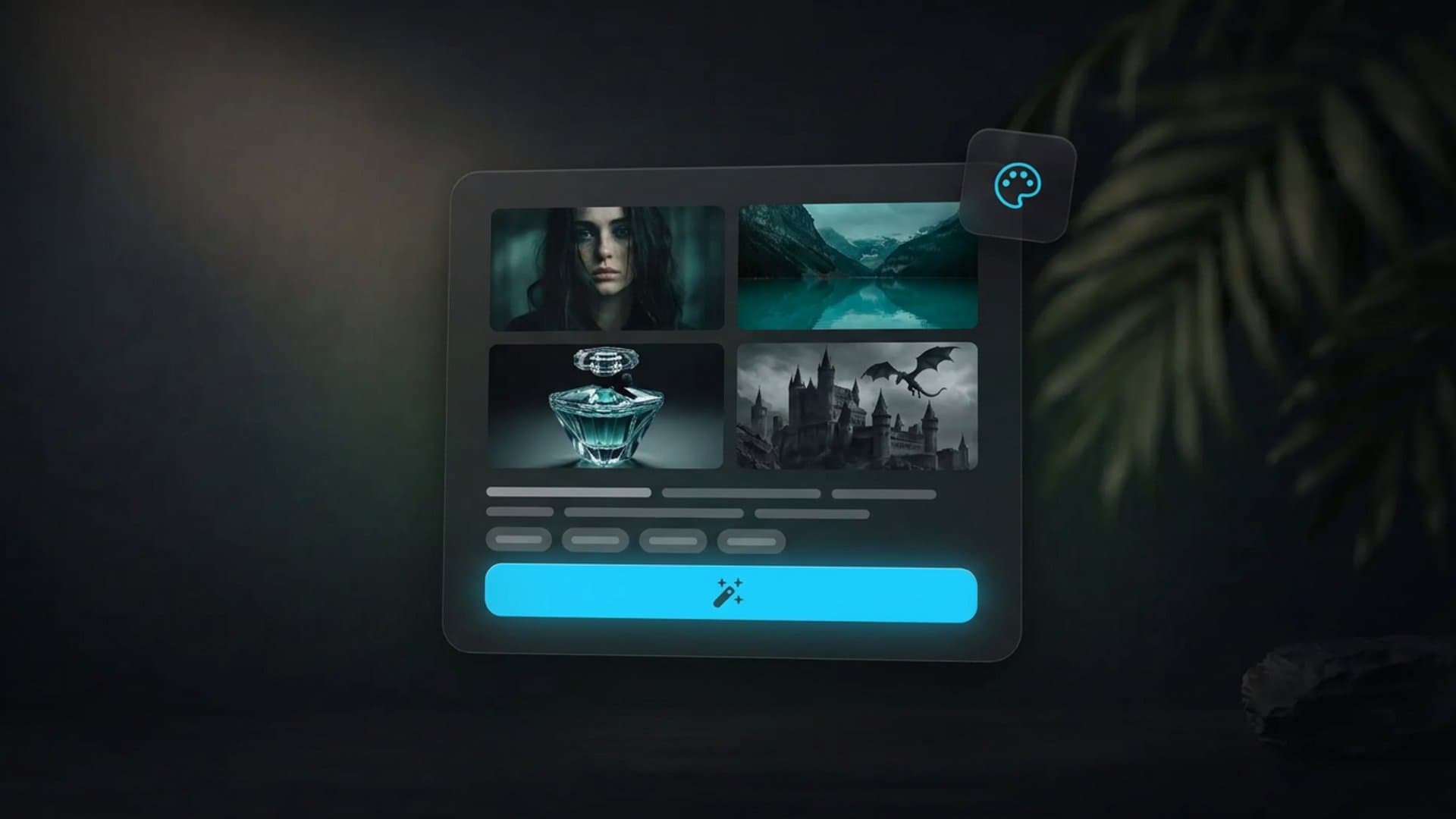
A Midjourney prompt is a description of the frame plus parameters after a double dash: --ar sets the format, --stylize controls how much of its own aesthetic the model imposes, --sref borrows a style from another image. Below are 40 ready-to-use prompts across eight genres: portrait and fashion, landscape, architecture, product, fantasy, sci-fi, illustration, food. Each comes with what you will get and why the wording works. The prompts are written for Midjourney V7 and V8.1, both available in Clipia; prices in credits are as of November 2026. We ran every prompt in Clipia, and each one comes with the best of the four variants it returned.
Quick answer
A working Midjourney prompt is built from five parts in this order: subject and action → setting → light → style, material or camera → parameters. The descriptive part is one or two comma-separated sentences, no "please" and no list of twenty adjectives. Parameters always go at the end: --ar 3:4 --stylize 250 and so on. The model reads the beginning of the prompt more carefully than the end, so put the main subject in the first words.
Three parameters decide 80 % of the result: --ar (format), --stylize from 0 to 1000 (higher means prettier and further from the text) and --raw (closer to the literal description and to photography). The rest, --chaos, --weird, --sref, --no, --seed, is tuning for the task. One Midjourney V7 generation in Clipia costs 8 credits, Midjourney V8.1 costs 8 credits at 1K and, at 2K, 12 credits; prices were checked on 3 November 2026. New accounts get 5 welcome credits on sign-up.
Any prompt from this collection can be pasted on the Midjourney page in Clipia: pick the model version, format and stylization in the panel, paste the text. The general principles of writing prompts for any image generator are covered in the guide on how to write an AI image prompt; this article is Midjourney prompts only.
What Midjourney V7 and V8.1 can do
Midjourney V7 is the model with the recognisable artistic look: strong composition, painterly light, good textures. Midjourney V8.1 was the default model at Midjourney itself from June to 23 July 2026: according to the developers' release note, HD mode gives twice the frame size and four times the resolution of V7, the model follows text more closely and renders captions placed in quotes. On 24 July 2026 Midjourney released V8.2 and made it the default; the Clipia catalog as of November 2026 offers V7 and V8.1. Most parameters are shared: --ar, --stylize, --chaos, --weird, --raw, --sref and personalization work in both versions, while --hd exists only from V8 onwards.
In Clipia, the Midjourney V7 panel has the aspect ratio (1:1, 9:16, 2:3, 3:4, 4:3, 3:2, 16:9), the model version (7 by default, the older 6.1, 6, 5.2 and 5.1 are also there) and the generation speed (Turbo, Fast, Relaxed, same price of 8 credits); the advanced settings hold Stylization from 0 to 1000, Weirdness from 0 to 3000 and Variety from 0 to 100, which is --chaos. Midjourney V8.1 adds the wide 21:9 and the tall 9:21 formats, a choice of 1K or 2K resolution, a style reference (instead of an --sref code you upload an image whose style should be repeated) and a Seed field. In V8.1 the Stylization slider starts at 0, while Midjourney's own default is 100, so set the value from the prompt. Each request returns four variants: that is what we got on every run for this article.
Midjourney parameters: what each one does
| Parameter | Range | What it does | In Clipia |
|---|---|---|---|
--ar W:H | 1:1, 3:4, 16:9 and so on | Aspect ratio of the frame | "Aspect Ratio" field in the panel |
--stylize / --s | 0–1000, default 100 | Strength of the house aesthetic: 50–150 literal, 400–700 beautiful, 1000 painterly | "Stylization" slider |
--raw | flag | Turns off embellishment, closer to photo and to text | In the prompt text |
--chaos / --c | 0–100 | Variation between the variants of one generation | "Variety" slider |
--weird / --w | 0–3000 | Weirdness, unusual choices | "Weirdness" slider |
--sref + --sw | code or URL; weight 0–1000 | Repeat the style of another image | Reference upload (V8.1) |
--no | comma-separated words | Exclude objects: text, people, frames | In the prompt text |
--seed | number | Repeatable composition between runs | "Seed" field in V8.1, in the prompt text for V7 |
--hd | flag (V8, V8.1) | Native resolution around 2K | "2K" option, 12 credits |
--exp | 0–100 | Experimental aesthetics, try small values | In the prompt text |
Format, Stylization, Variety and Weirdness are easier to set in the panel: the values are the same as --ar, --stylize, --chaos and --weird. If you paste a prompt together with its parameters, set the same numbers in the panel so the two do not contradict each other; that is how the examples below were made. --raw, --no and --exp stay at the end of the prompt text.
40 Midjourney prompts by genre
The prompts are written in English with parameters at the end. Change the descriptive part for your task; the parameters are chosen for the genre and explained in the note. All formats in this collection except 21:9 exist in both V7 and V8.1. Each example is one of four variants from a single run in Clipia, not retouched; the badge names the model: V8.1 for photography, interiors and products, V7 for painterly genres, as advised below.
Portrait and fashion
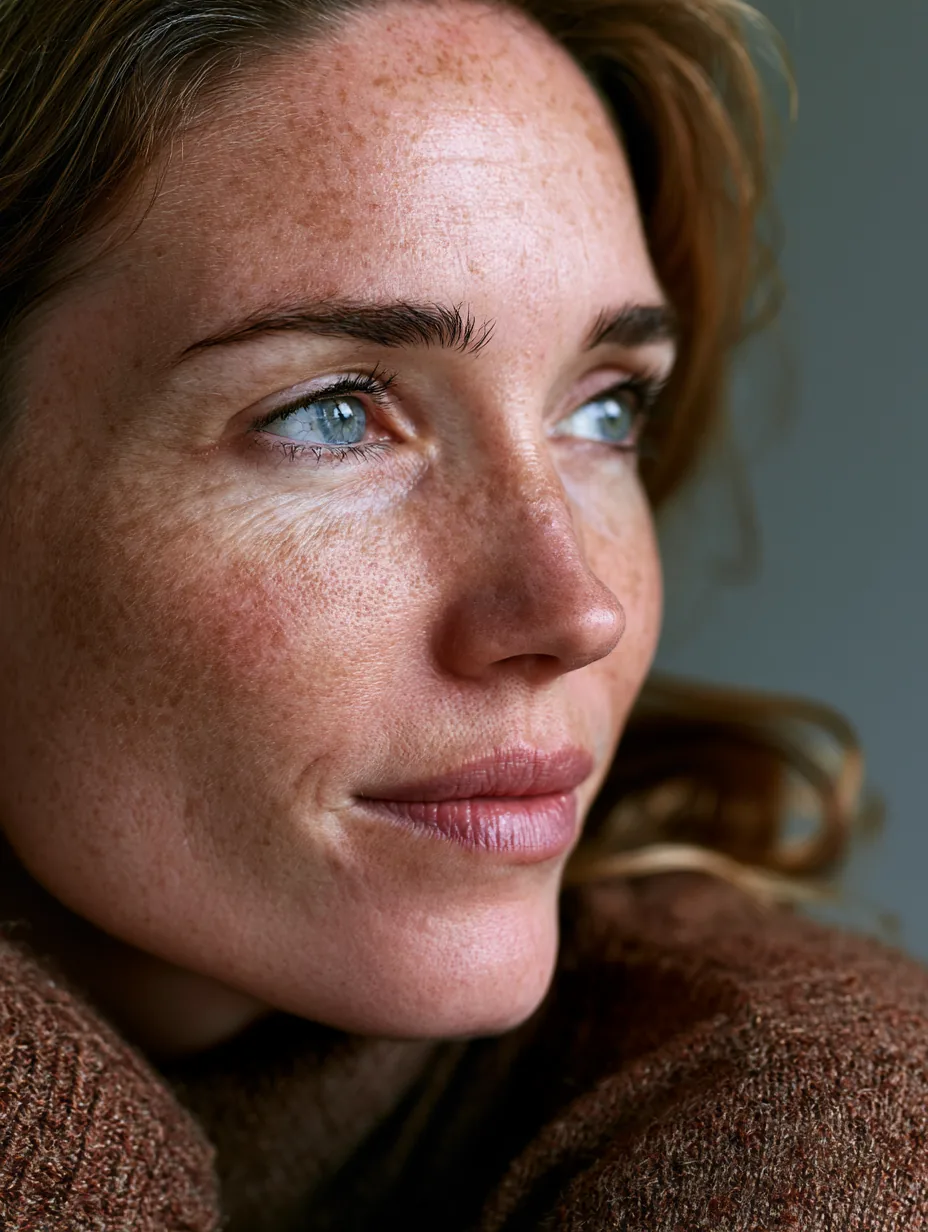
1. Cinematic portrait by a window. The base for any portrait: one light source and --raw.
 Midjourney V8.1
Close-up portrait of a woman in her thirties by a window, soft side daylight, freckles, natural skin without retouching, neutral grey background, shot on 85mm, shallow depth of field --ar 3:4 --stylize 150 --rawWhat you get: an honest photo portrait without "plastic" skin. Why it works: --raw plus low stylization remove the gloss, while "85mm" and "shallow depth of field" set optics the model knows well.
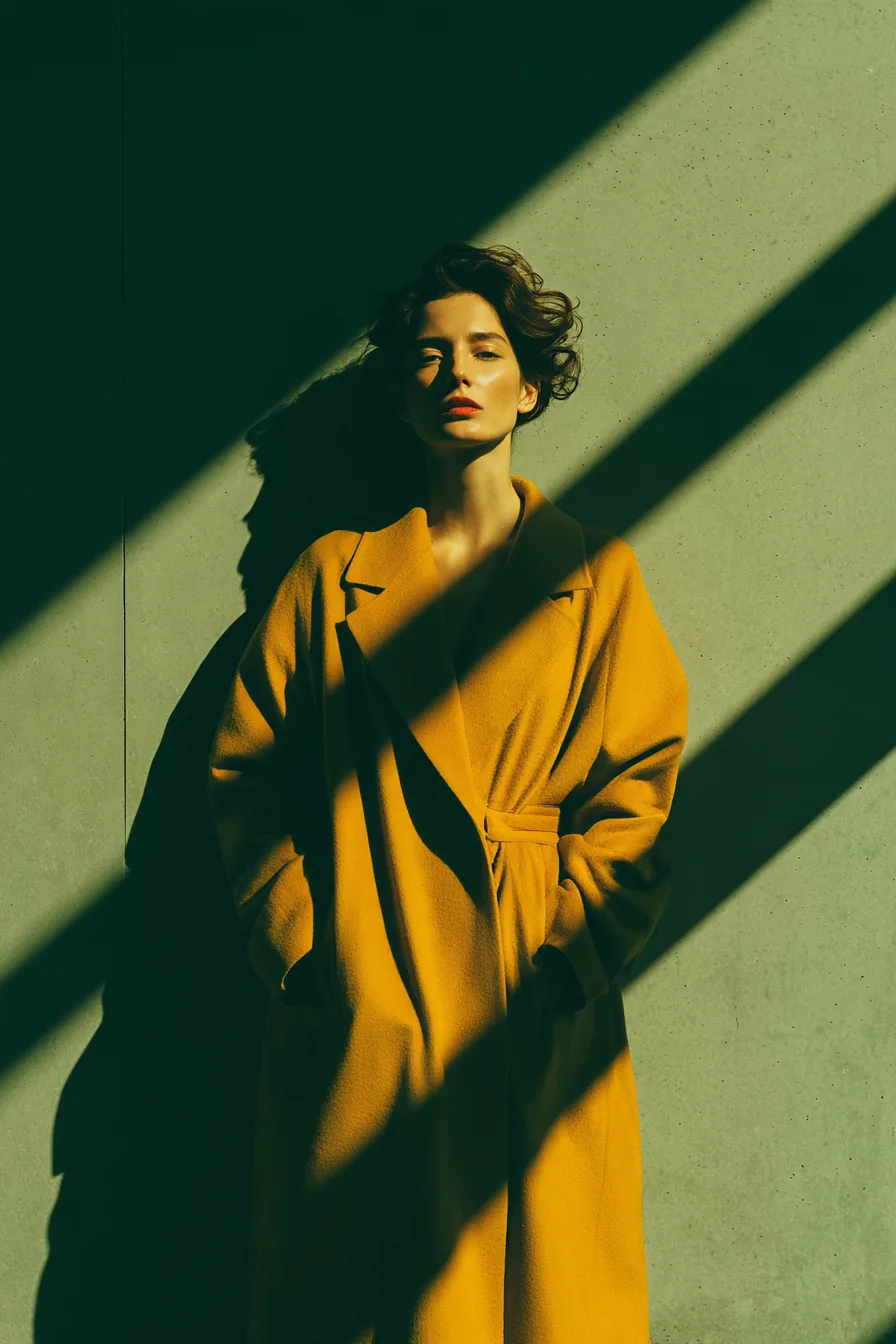
2. Editorial fashion shoot.
 Midjourney V8.1
Editorial fashion shoot: a model in an oversized ochre coat against a concrete wall, harsh midday light, long shadows, minimalism, film grain --ar 2:3 --stylize 400What you get: a magazine spread with graphic shadows. Why it works: "harsh light" and "long shadows" are concrete instructions, and stylization 400 adds compositional boldness without breaking realism.
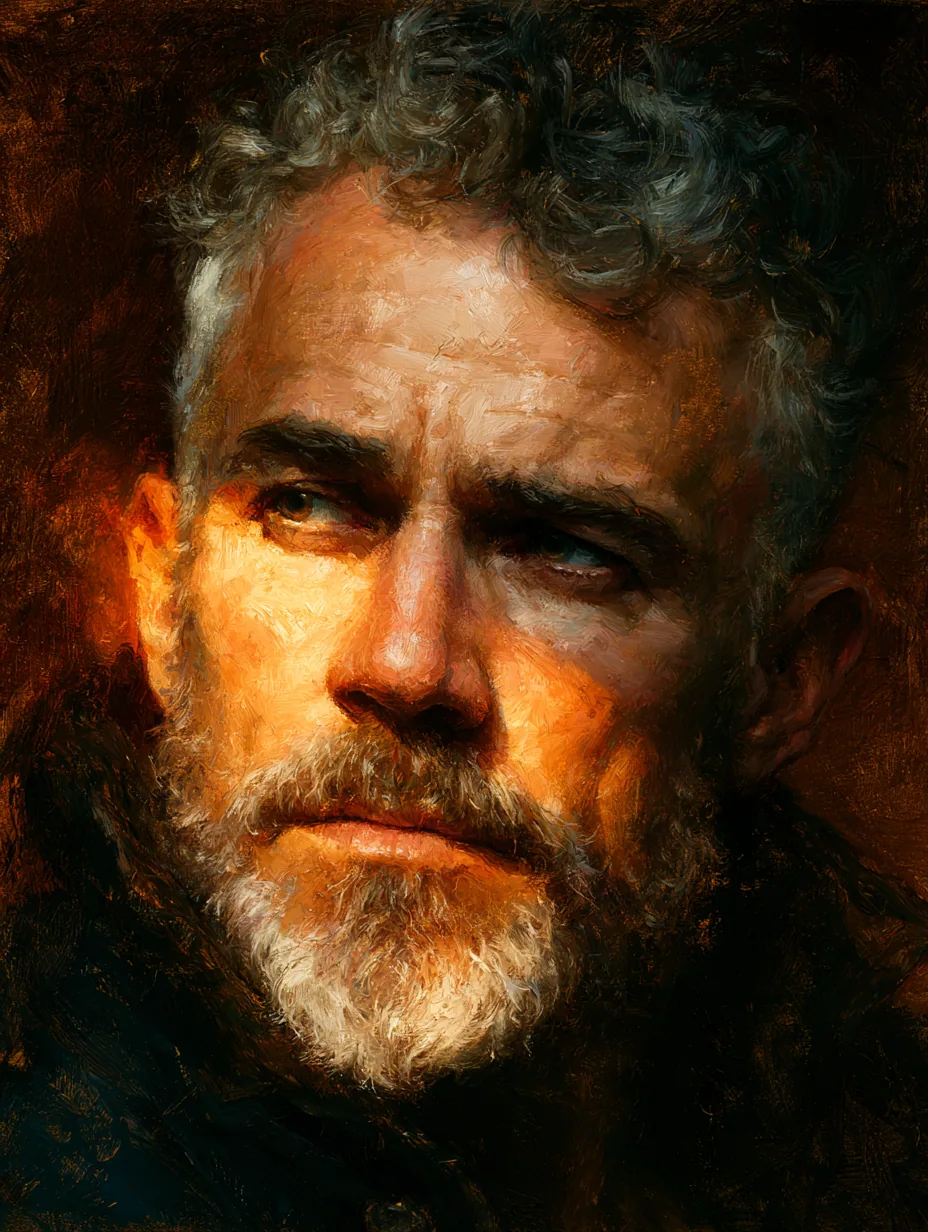
3. Old masters portrait.
 Midjourney V7
Portrait of a man in half-darkness, a single warm lamp from the left, triangle of light on the cheek, dark brown background, oil painting in the manner of the old masters, visible brushstrokes --ar 3:4 --stylize 600 --chaos 10What you get: a painterly portrait with Rembrandt lighting. Why it works: "triangle of light on the cheek" is a professional term the model translates into the right lighting scheme; high stylization and brushstrokes pull it away from photography.
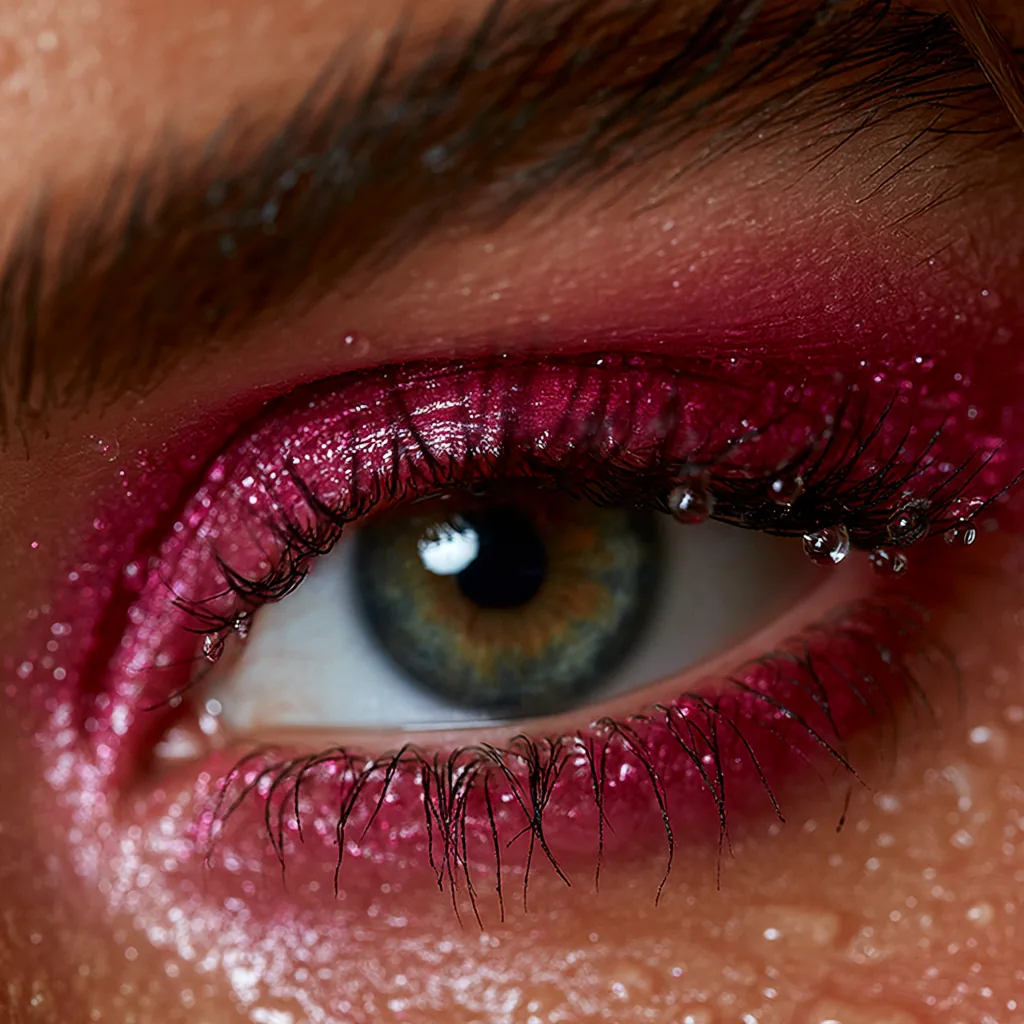
4. Beauty shot with colour.
 Midjourney V8.1
Close-up beauty portrait: dewy skin, bold monochrome fuchsia eyeshadow, water drops on the lashes, studio ring flash, glossy magazine --ar 1:1 --stylize 300 --no text, logosWhat you get: a cover-grade beauty shot with no stray captions. Why it works: --no text, logos closes the usual problem of glossy references: the model likes to draw magazine headlines on its own.
5. Street portrait in motion.
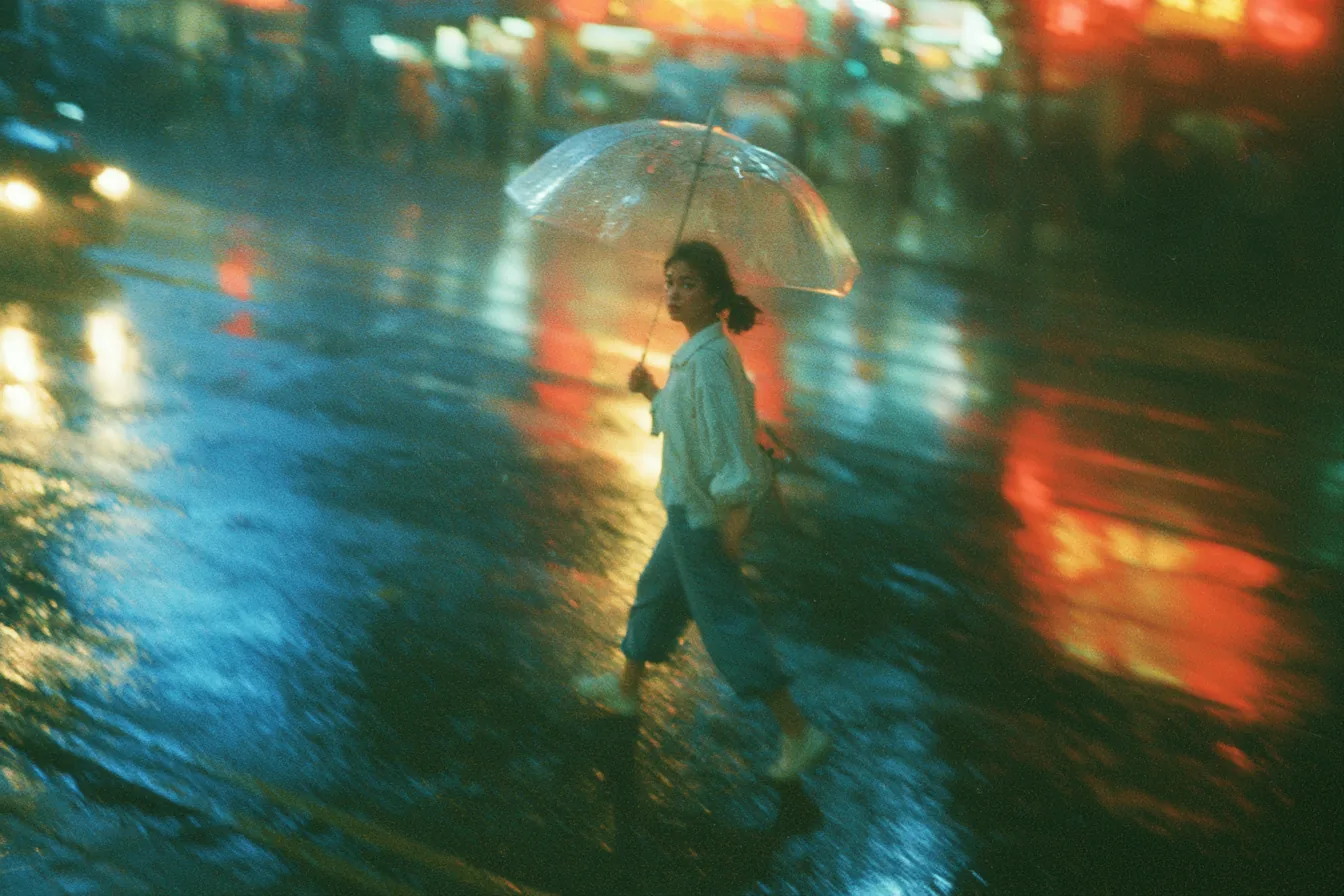 Midjourney V8.1
A young woman crosses the street in the rain under a transparent umbrella, neon signs reflected in the wet asphalt, slight motion blur, reportage photography on 35mm --ar 3:2 --stylize 200 --rawWhat you get: a lively reportage frame with reflections. Why it works: "slight motion blur" gives the model permission for imperfect sharpness, and the image stops looking staged.
Landscape and nature
6. Foggy forest at dawn.
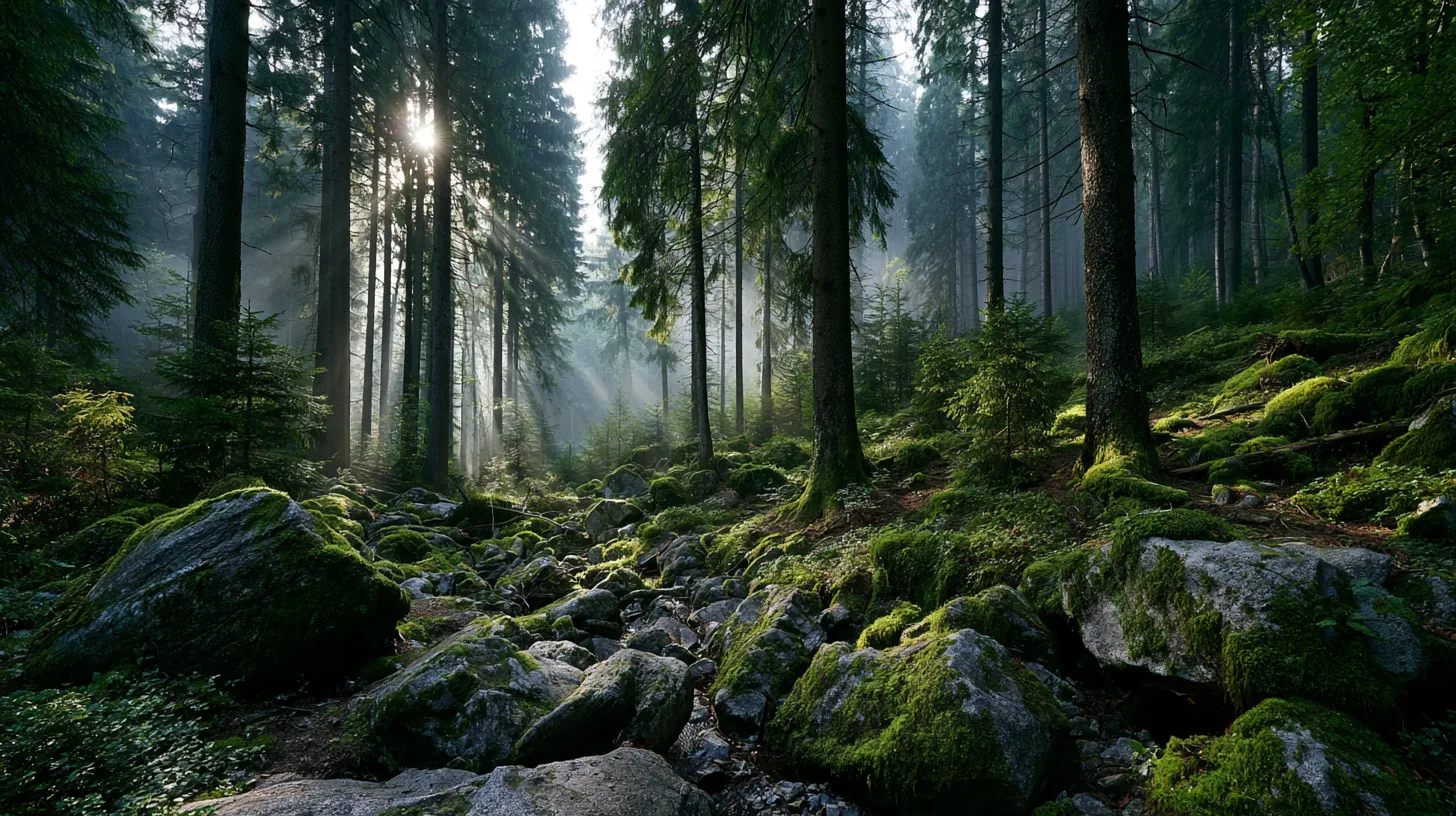 Midjourney V8.1
Coniferous forest at dawn, thick fog between the trunks, sun rays breaking through the branches, moss on the stones, silence, wide-angle shot --ar 16:9 --stylize 250What you get: an atmospheric forest with volumetric rays. Why it works: fog and rays are two elements Midjourney almost always renders well; medium stylization gives beauty without excess.
7. Mountain lake for a travel magazine.
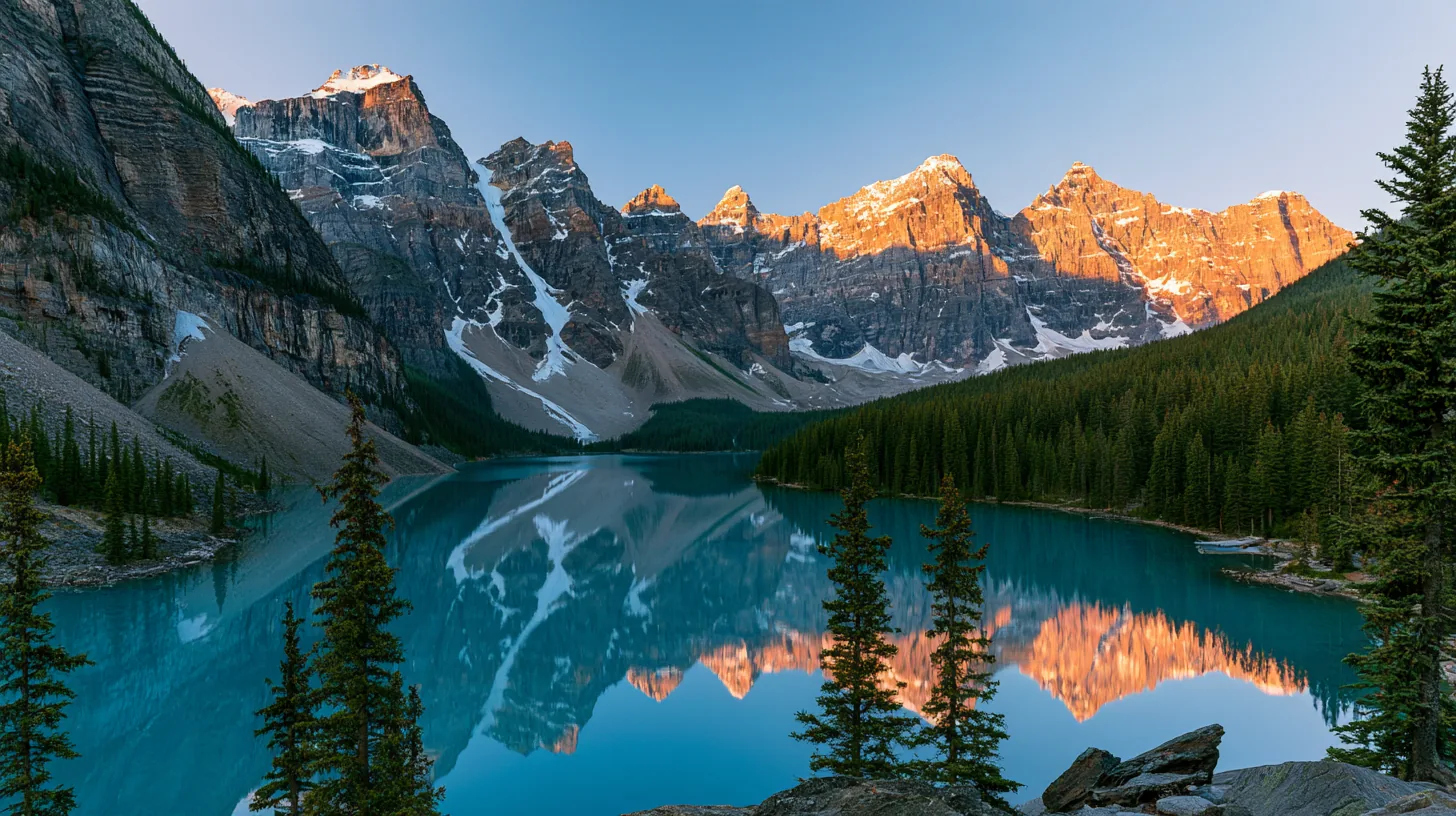 Midjourney V8.1
Turquoise mountain lake surrounded by snow-capped peaks, reflection in mirror-still water, golden hour, travel magazine photography, high detail --ar 16:9 --stylize 100 --rawWhat you get: a postcard-like but believable landscape. Why it works: "travel magazine photography" sets the genre, and --raw with stylization 100 keeps the model from painting the sky in neon.
8. Desert and a lone tree.
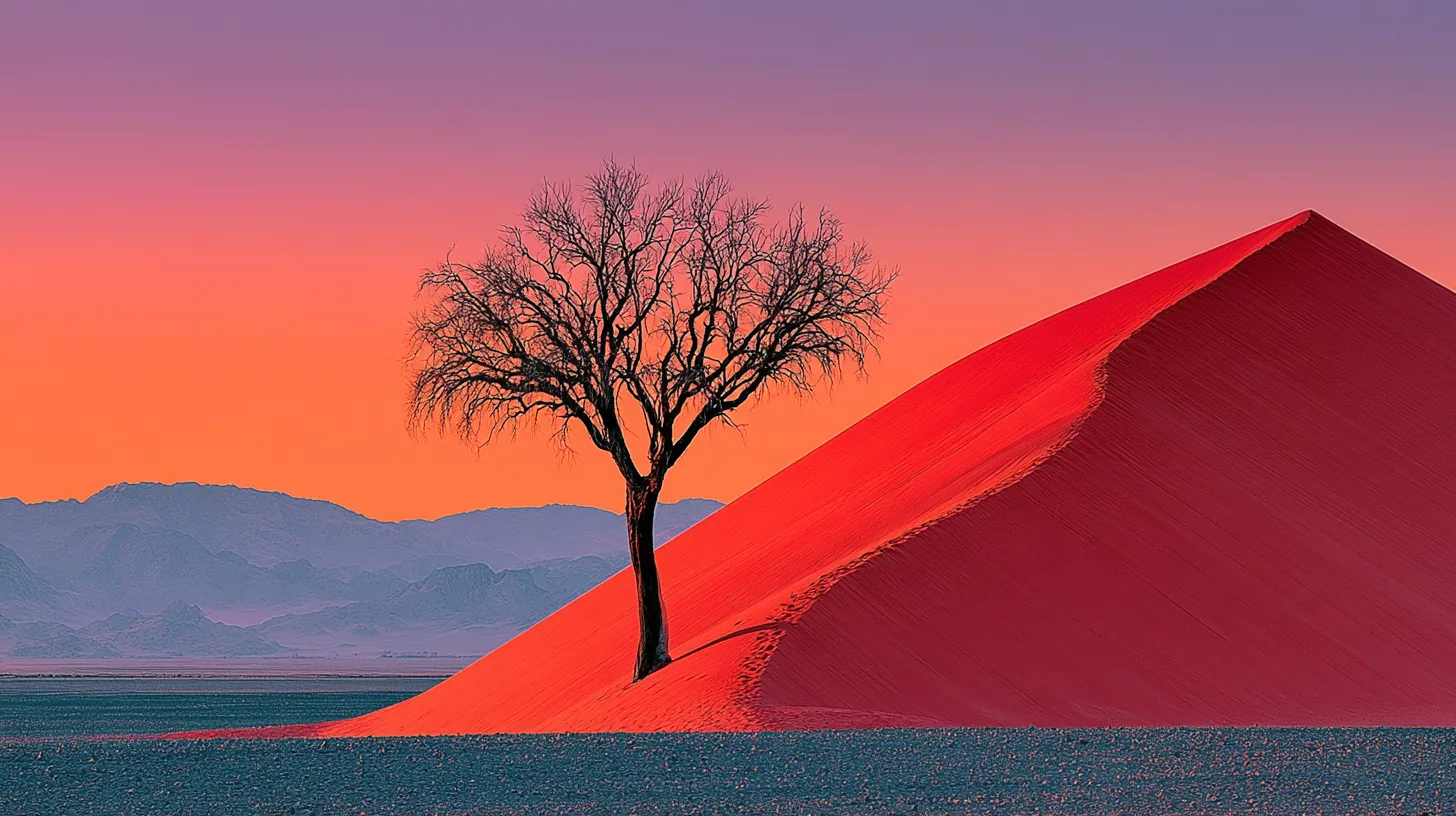 Midjourney V8.1
Red desert dunes, a lone dead tree with bare branches on the ridge, long shadow, clear sky in a gradient from lilac to orange, minimalism --ar 16:9 --stylize 500 --no leavesWhat you get: a graphic minimalist frame for a cover or a presentation background. Why it works: the prompt has few objects, so the model spends its effort on light and sand texture rather than on a ten-element composition. In our first run a plain "dead tree" came out with foliage in all four variants, so the bare branches are named directly and the leaves are removed with --no leaves.
9. Northern lights over a fjord.
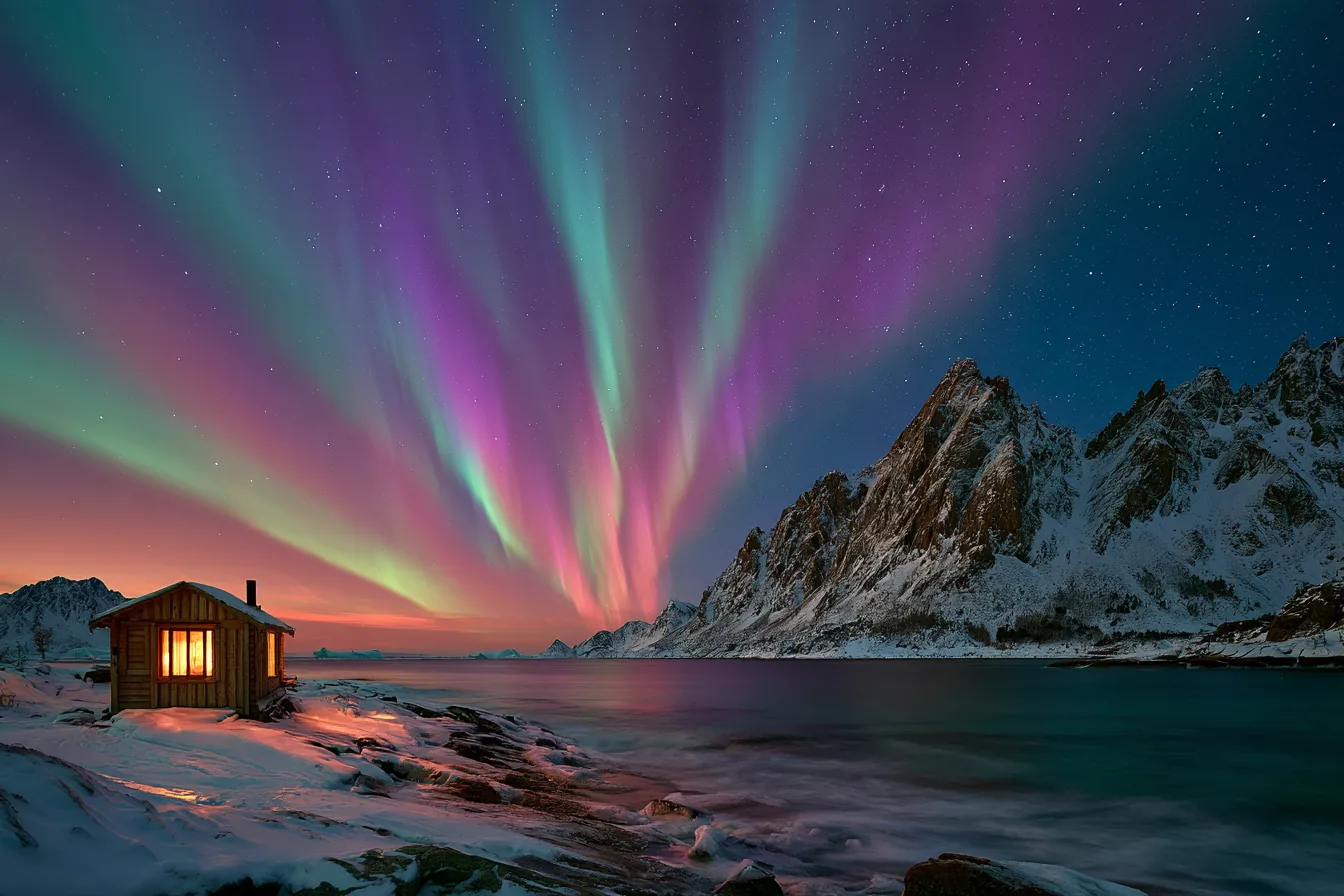 Midjourney V8.1
Northern lights over a frozen fjord, green and violet waves of light, a wooden cabin with a warm window on the shore, long exposure, stars --ar 3:2 --stylize 300What you get: a night landscape with a warm accent. Why it works: the "warm window" gives a focal point without which the aurora looks like a screensaver; "long exposure" explains the smoothness of the sky to the model.
10. Macro after rain.
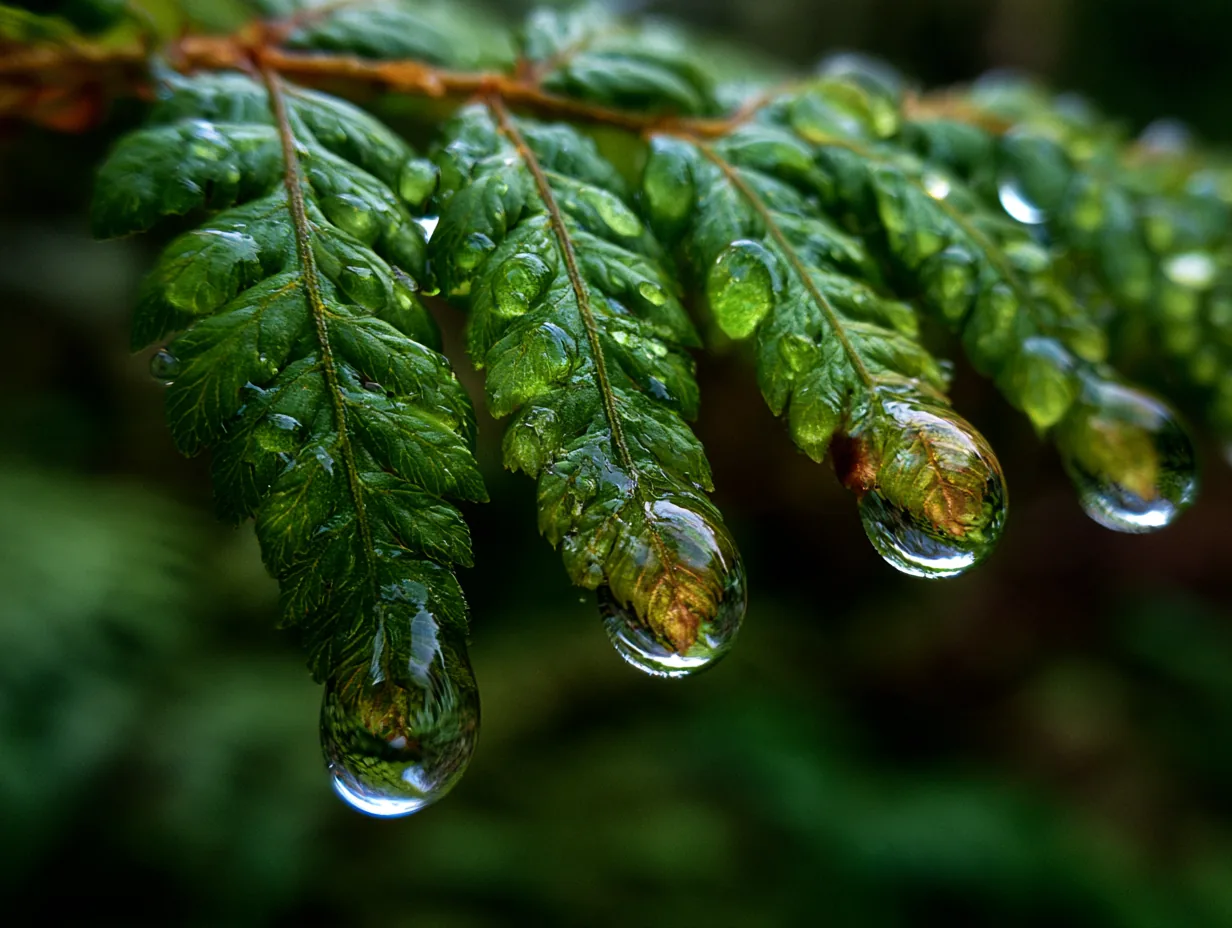 Midjourney V8.1
Macro photograph of a fern leaf after rain, water drops acting as lenses, the forest reflected in every drop, soft diffused light, depth of field of a few millimetres --ar 4:3 --stylize 200 --rawWhat you get: a detailed macro with reflections in the drops. Why it works: reflections in drops are a recognisable macro technique, and the model reproduces it when named directly.
Architecture and interior
11. Brutalist museum.
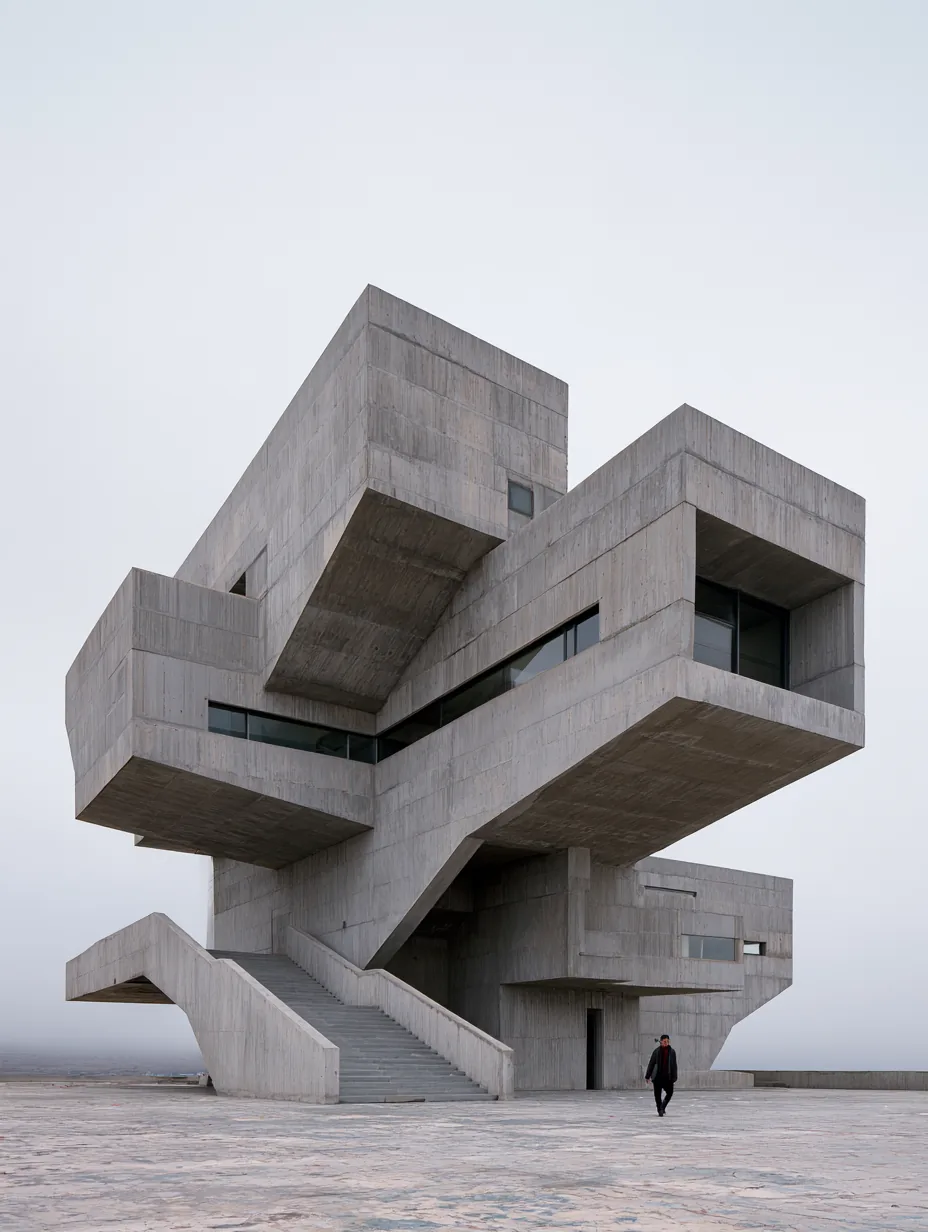 Midjourney V8.1
Brutalist museum building of raw concrete, geometric cantilevers, a single human figure for scale, overcast sky, architectural photography --ar 3:4 --stylize 150 --rawWhat you get: a strict architectural frame. Why it works: "figure for scale" is an architectural photographers' device that makes the building huge; an overcast sky removes hard shadows and emphasises the concrete.
12. Scandinavian living room.
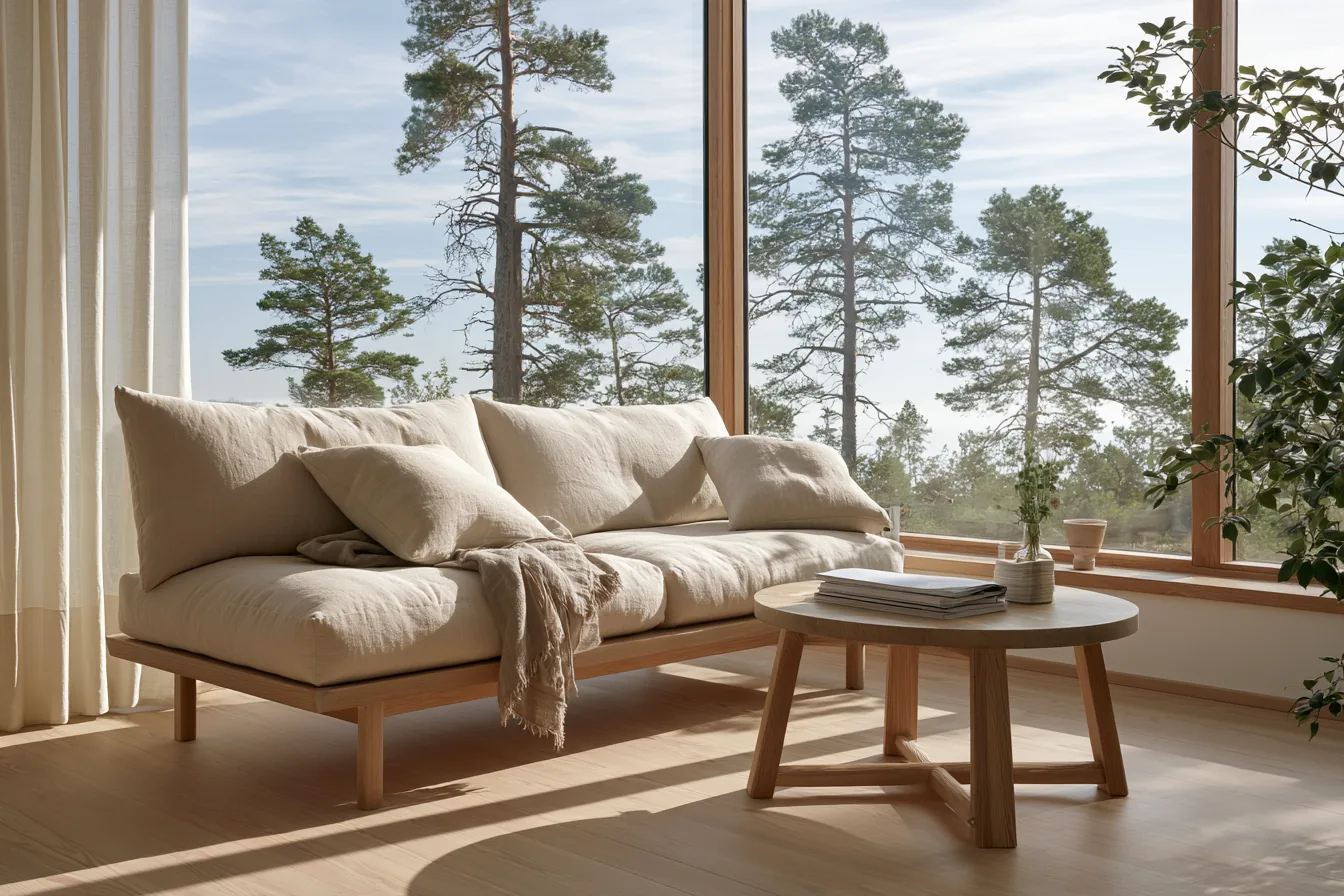 Midjourney V8.1
Bright Scandinavian living room, oak floor, linen sofa, large window with a view of pine trees, morning light, interior catalogue photography --ar 3:2 --stylize 100What you get: a catalogue interior you want to walk into. Why it works: materials are named, oak and linen, rather than an abstract "cosy"; the model draws materials better than moods.
13. Japanese courtyard.
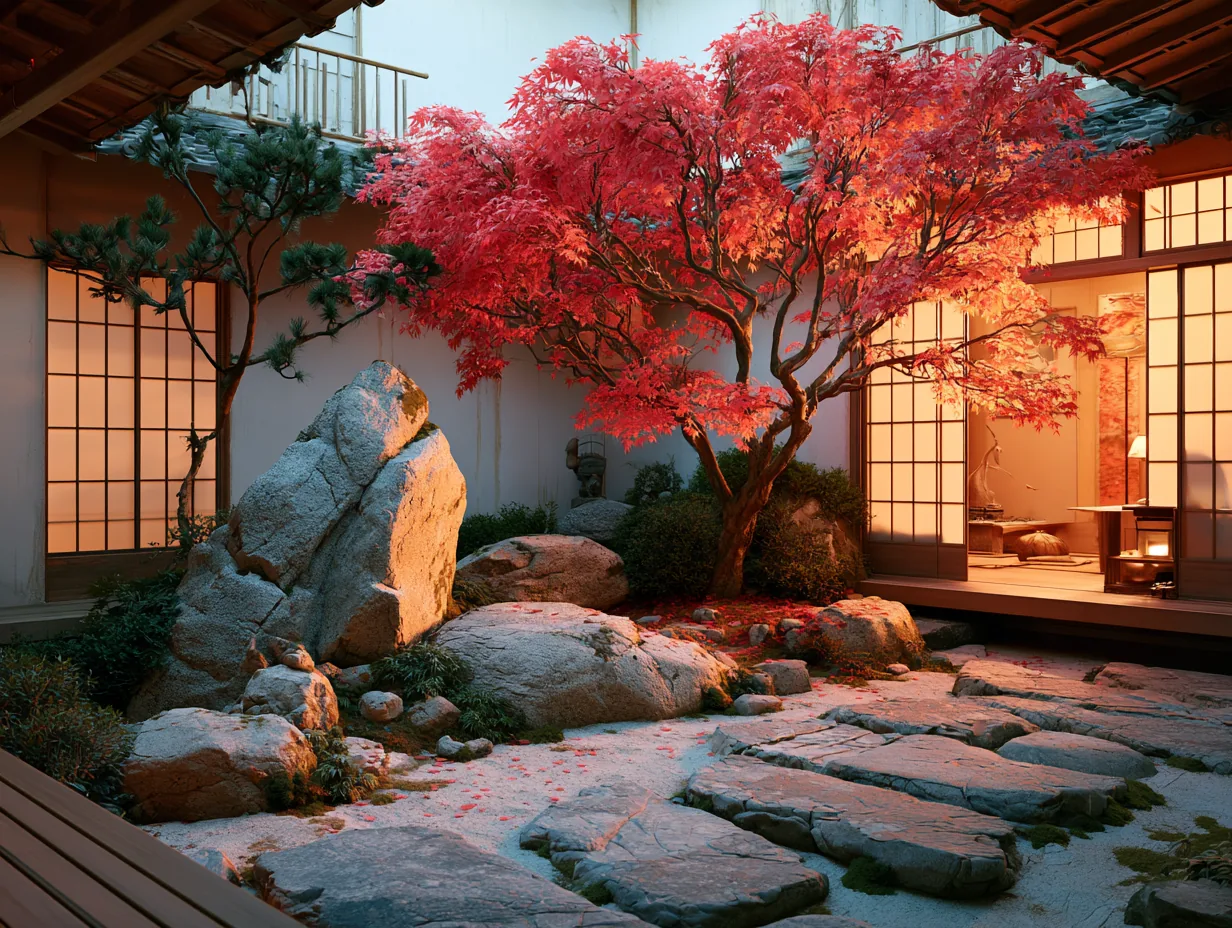 Midjourney V8.1
Inner courtyard of a Japanese house, rock garden, sliding shoji screens, a maple with red leaves, soft evening light, calm --ar 4:3 --stylize 250What you get: a quiet scene with one colour accent. Why it works: a red maple against grey stones and pale wood is a ready colour scheme; the model does not have to invent one.
14. Hotel lobby of the future.
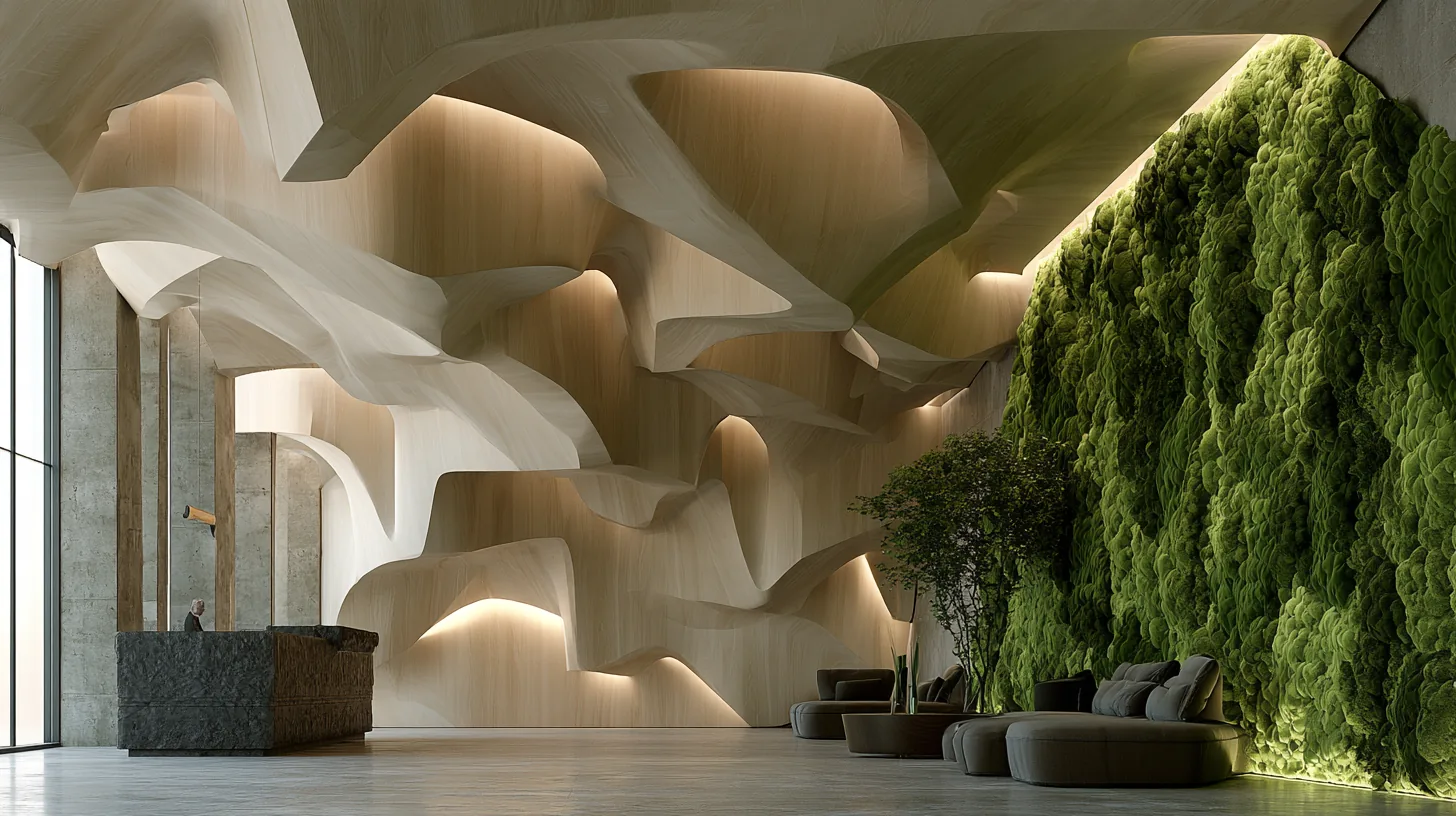 Midjourney V8.1
Lobby of a future hotel: parametric curves of a light wood ceiling, hidden lighting, a living moss wall, render for an architectural competition --ar 16:9 --stylize 200What you get: a convincing architectural visualisation. Why it works: "render for a competition" switches the model into professional presentation style: clean surfaces, correct perspective.
15. Isometric apartment.
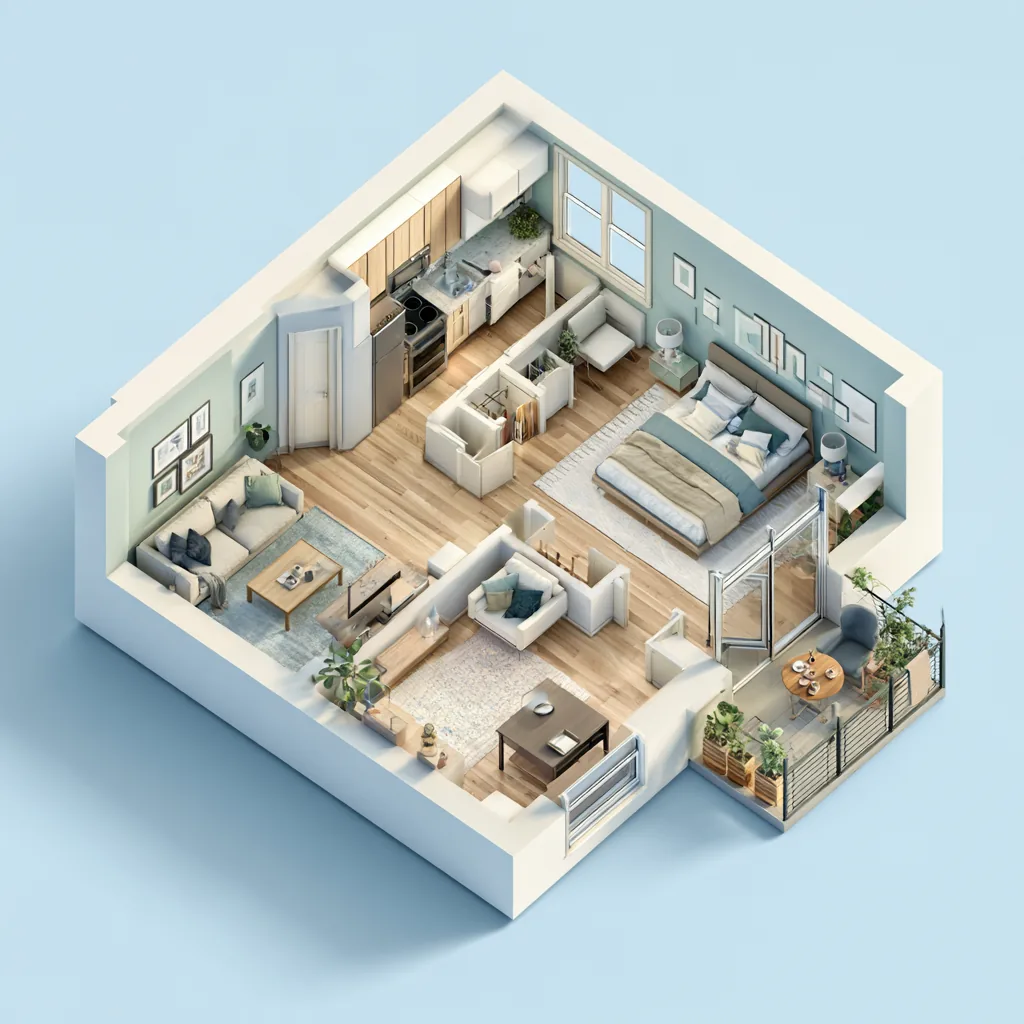 Midjourney V8.1
Isometric cutaway of a two-room apartment, furniture and layout visible, clean lines, pastel palette, architectural visualisation style --ar 1:1 --stylize 100 --no peopleWhat you get: a neat isometric for a presentation or an article about layouts. Why it works: --no people matters: in isometrics the model likes to add little figures with unreadable proportions.
Product and advertising
For product shots keep stylization low and add --raw: prettiness hurts here, and accuracy of shape is what matters.
16. Perfume on wet stone.
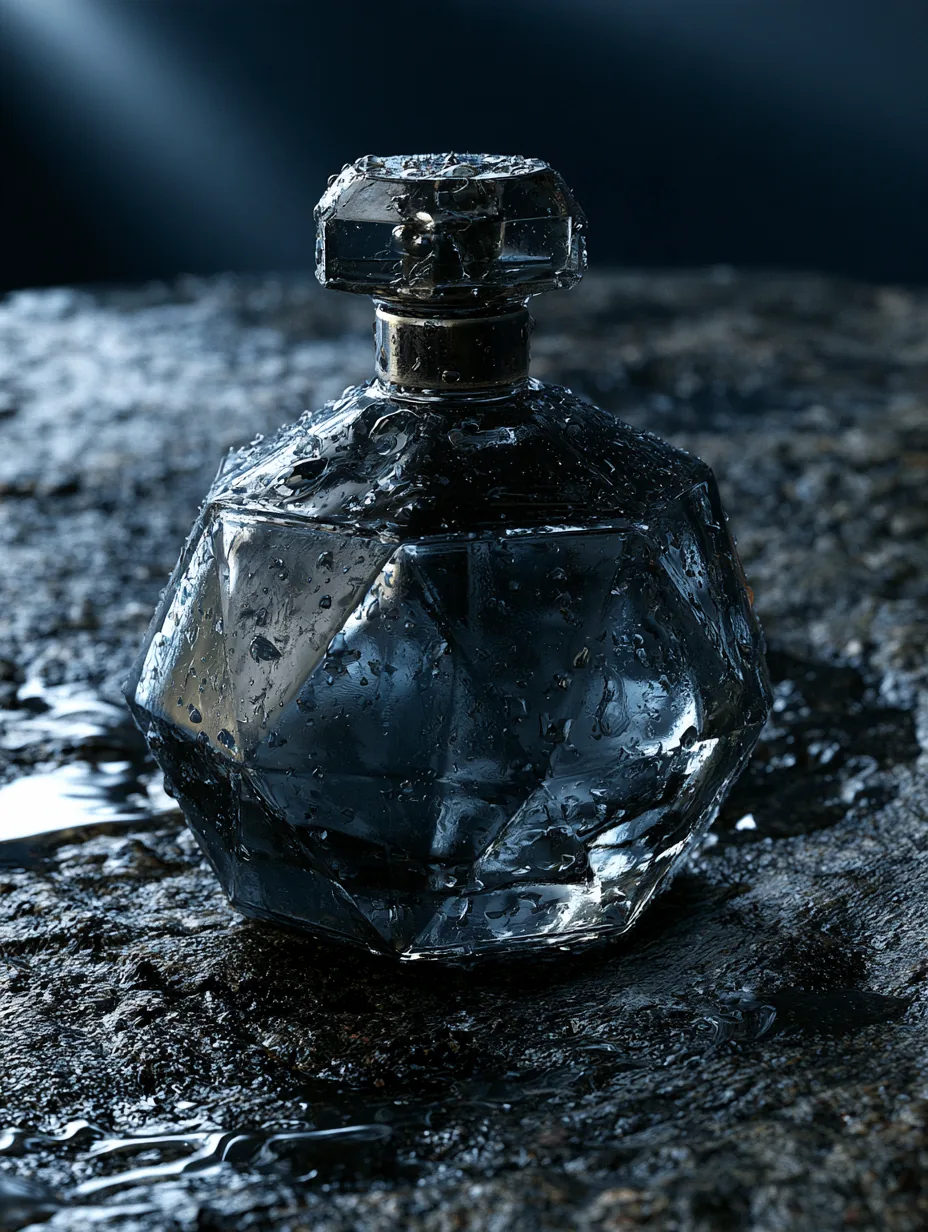 Midjourney V8.1
A faceted glass perfume bottle on wet black stone, water drops, a beam of hard light, deep dark background, advertising product photography --ar 3:4 --stylize 150 --rawWhat you get: an expensive-looking ad frame with highlights on the facets. Why it works: "faceted glass" and "beam of hard light" together produce the refractions perfume is photographed for.
17. Levitating sneaker.
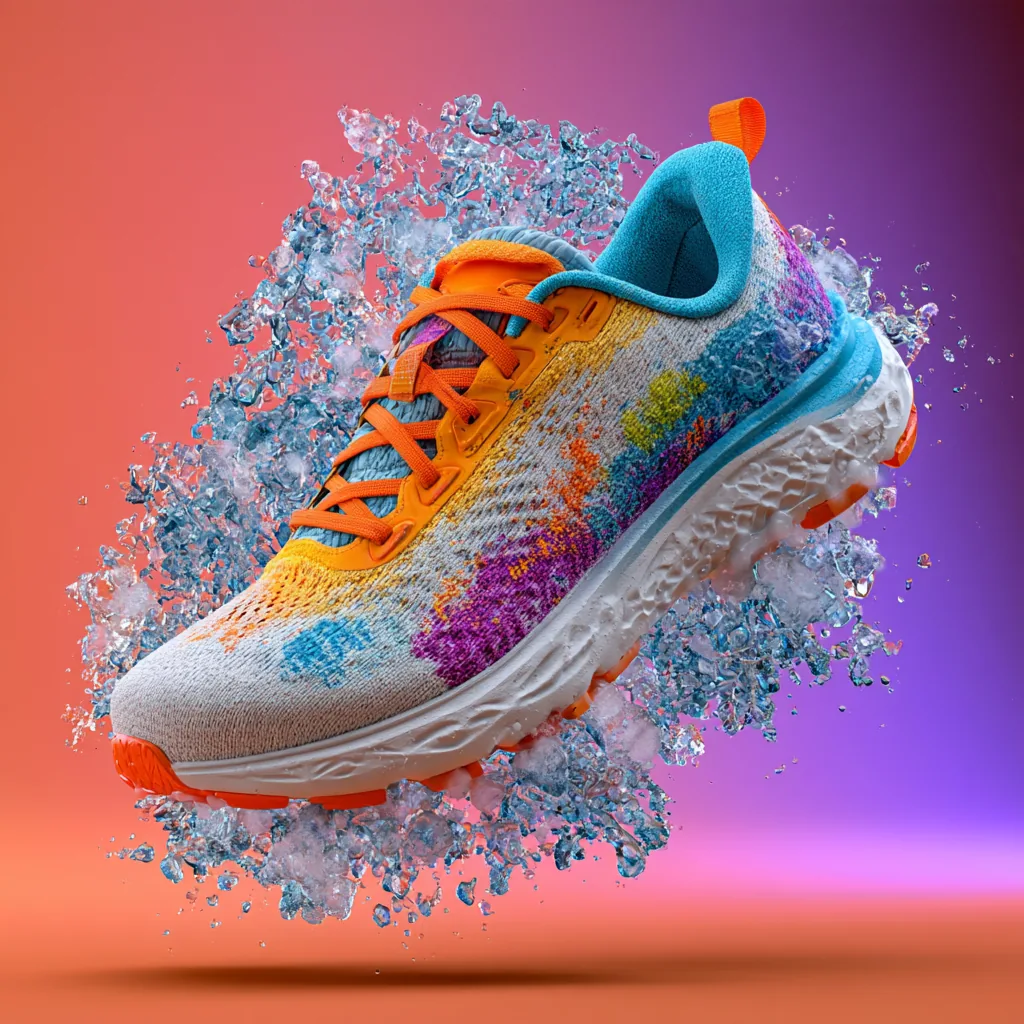 Midjourney V8.1
A running sneaker floats in the air, frozen water splashes around it, bright gradient background from coral to lilac, studio light, advertising poster --ar 1:1 --stylize 300What you get: a dynamic poster in the spirit of sports brands. Why it works: "frozen splashes" is a visual cliché the model understands, and the named background gradient spares you random colours.
18. Cream and citrus.
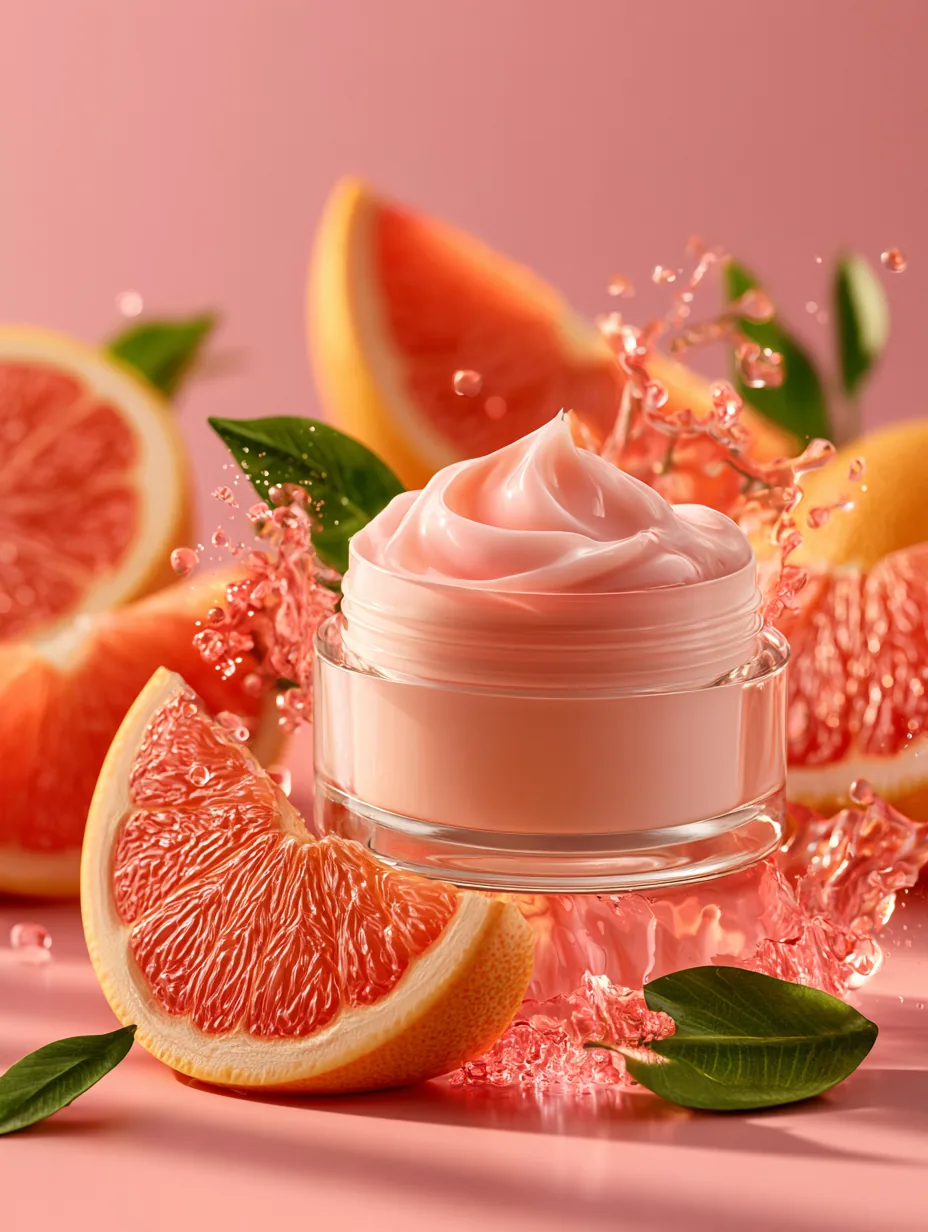 Midjourney V8.1
A jar of face cream surrounded by grapefruit slices and leaves, juice splashes, freshness, sunlight, pastel pink background, commercial photography --ar 3:4 --stylize 200 --no textWhat you get: a fresh frame for a product card. Why it works: --no text removes invented label copy; you would have to replace it with your own anyway.
19. Watch macro.
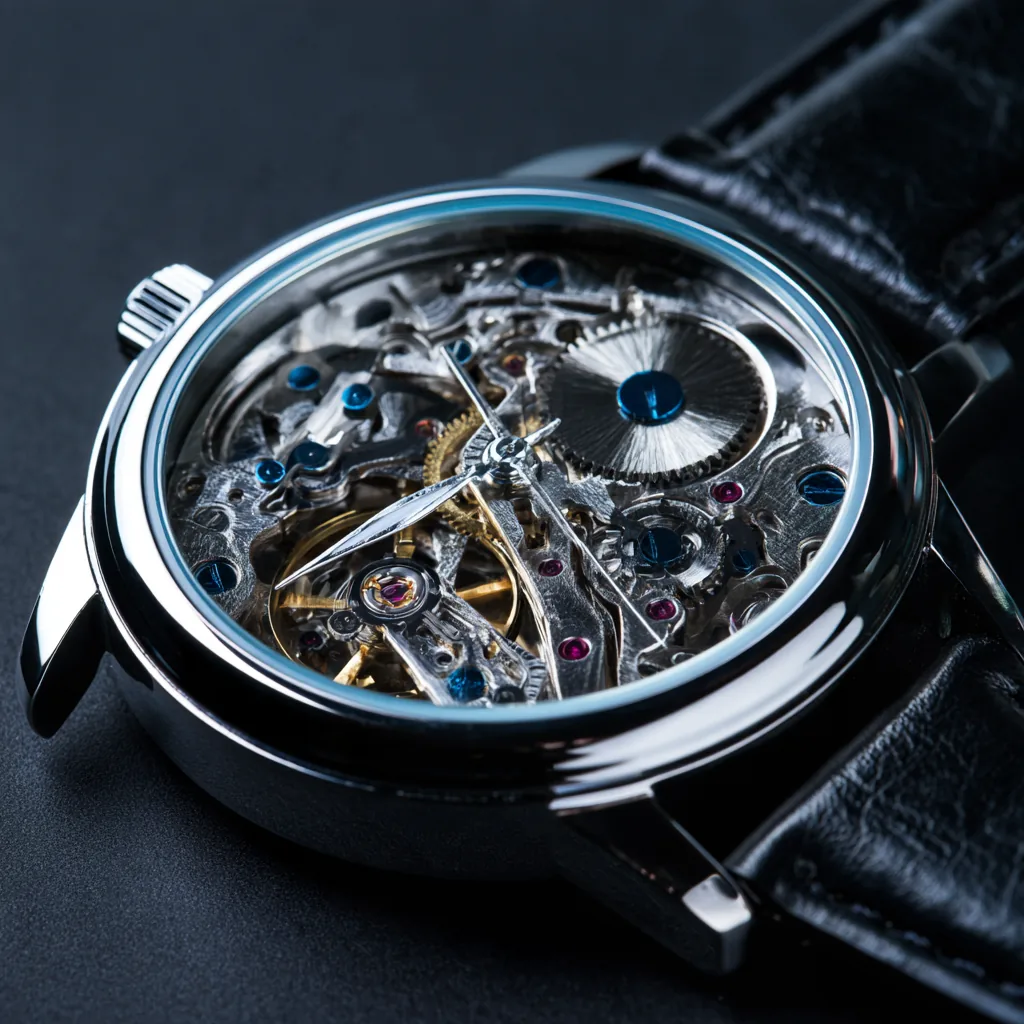 Midjourney V8.1
Macro photograph of a mechanical watch with an open movement, gears, sapphire crystal, cold metal, dramatic light, dark background --ar 1:1 --stylize 100 --rawWhat you get: a detailed frame of the movement. Why it works: minimal stylization and --raw hold the geometry of the gears; at stylization 500 the model starts drawing "beautiful" but impossible mechanisms.
20. Iced coffee for a menu.
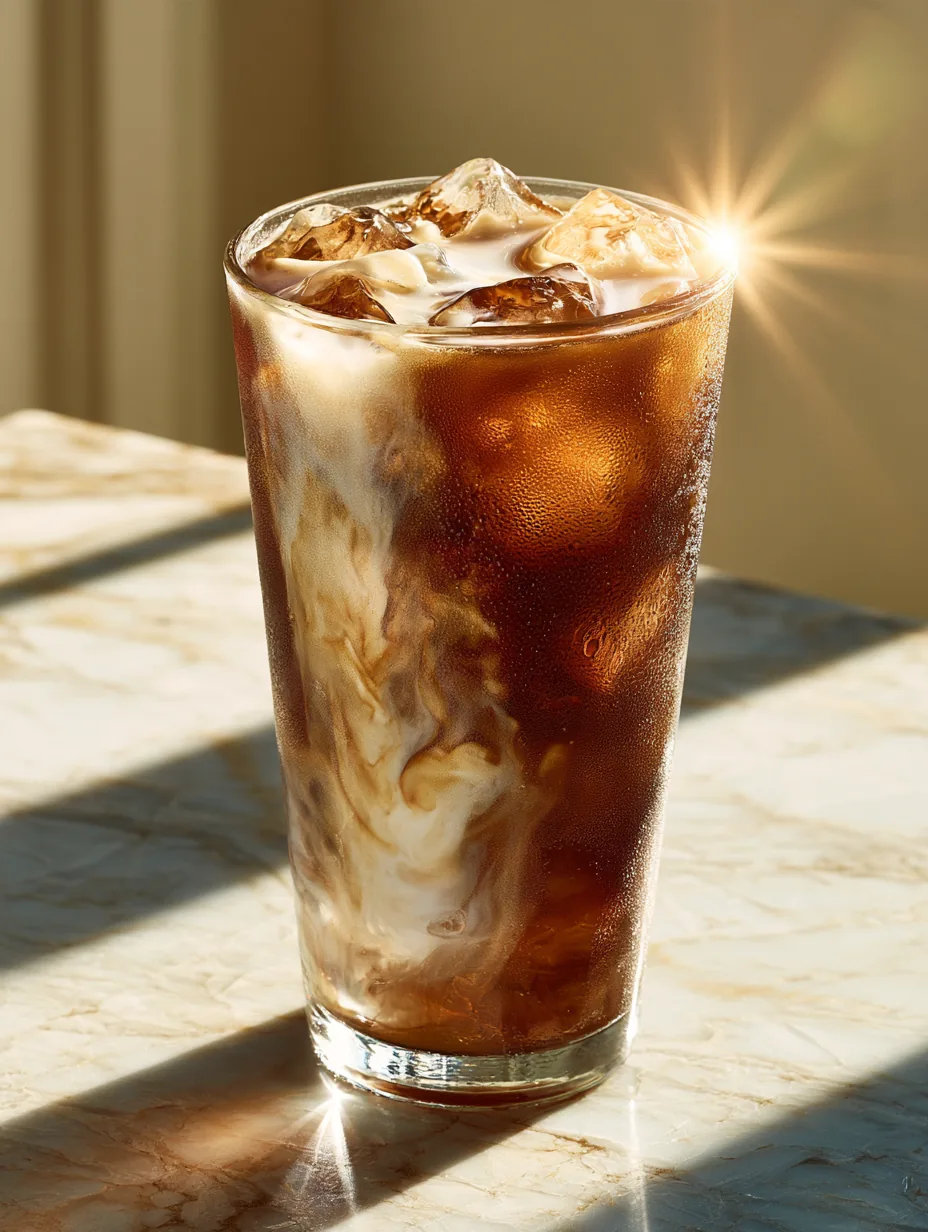 Midjourney V8.1
A glass of iced coffee with a milk swirl, condensation on the glass, a sun flare, marble table, photography for a coffee shop menu --ar 3:4 --stylize 150What you get: an appetising drink shot. Why it works: condensation and the milk swirl are details that read as "fresh" without the word "fresh".
Fantasy and concept art
Here stylization goes to 500 and above: the genre lives on Midjourney's house aesthetic, and --chaos and --weird add unexpected choices.
21. Castle above the clouds.
 Midjourney V7
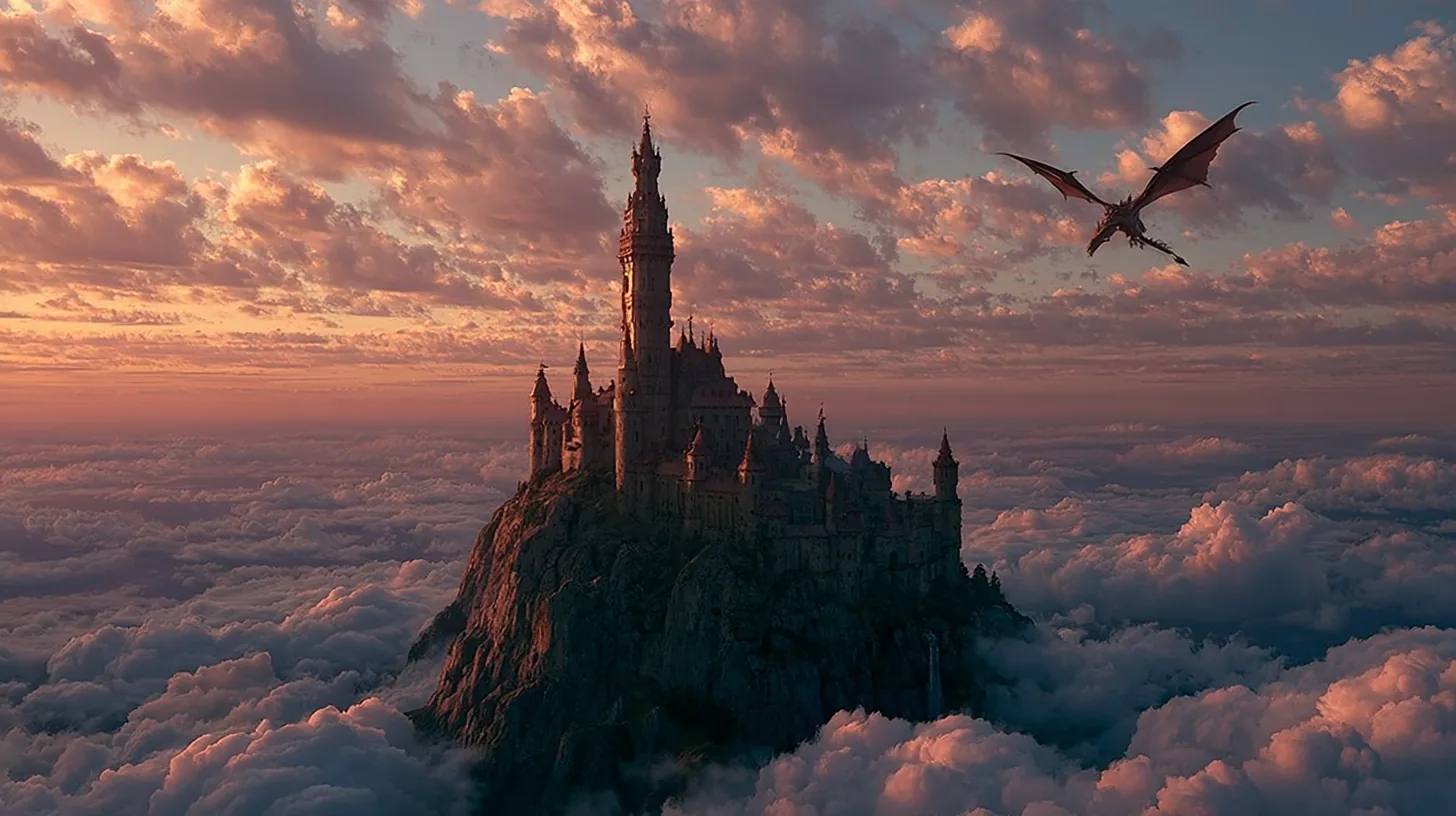
A castle on a cliff above the clouds, a dragon circling the towers, sunset sky, epic scale, digital painting for a fantasy novel cover --ar 16:9 --stylize 700 --chaos 20What you get: a cover in the spirit of the big fantasy series. Why it works: --chaos 20 gives four noticeably different compositions in one generation; for a cover that matters more than precision.
22. Forest spirit.
 Midjourney V7
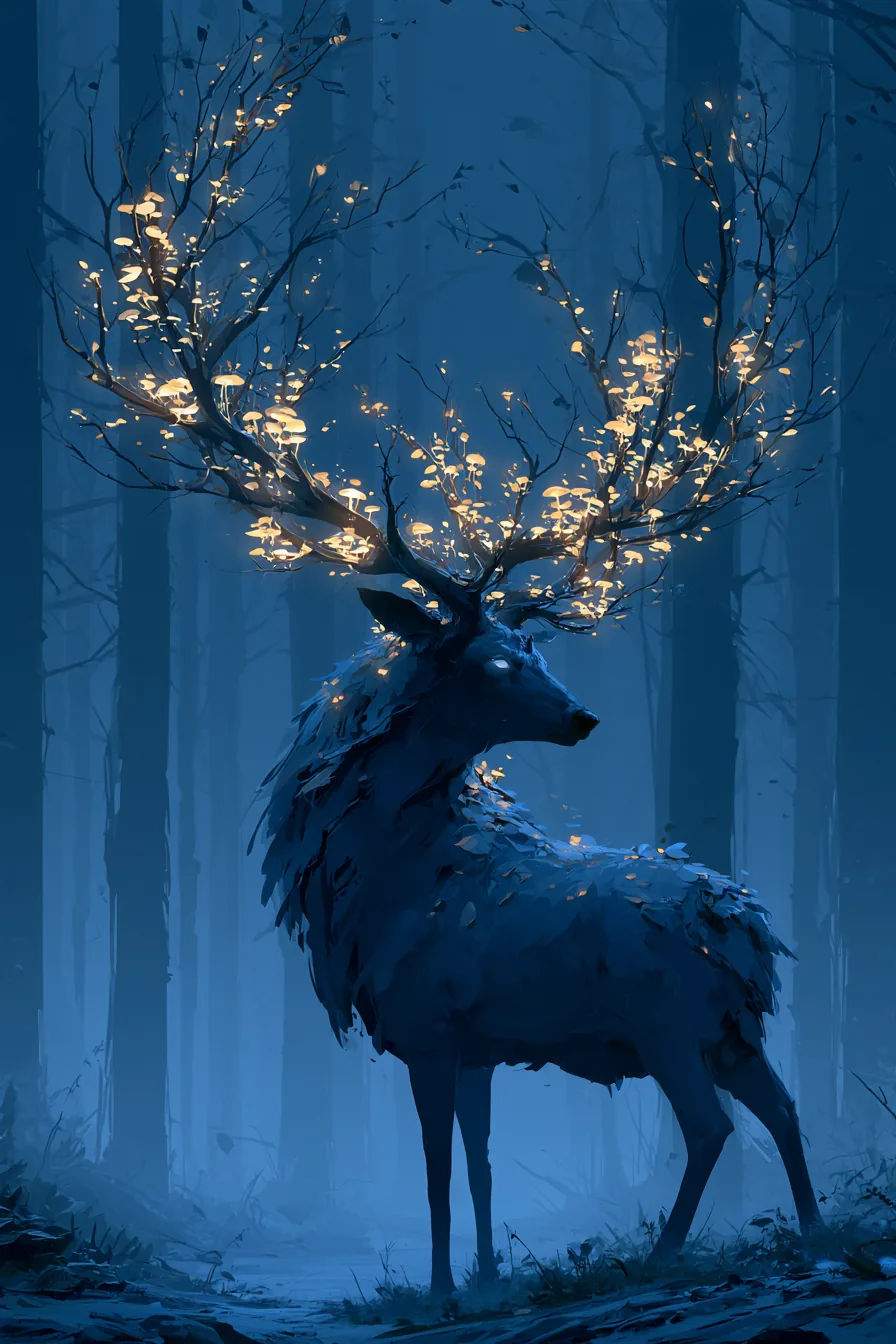
A forest spirit in the form of a stag with branching antlers, glowing mushrooms growing in the antlers, night forest, bioluminescence, mysterious, concept art --ar 2:3 --stylize 800What you get: a character for a game or a card deck. Why it works: one unusual element, mushrooms in the antlers, instead of a dozen; the model renders it in detail.
23. City on a turtle.
 Midjourney V7
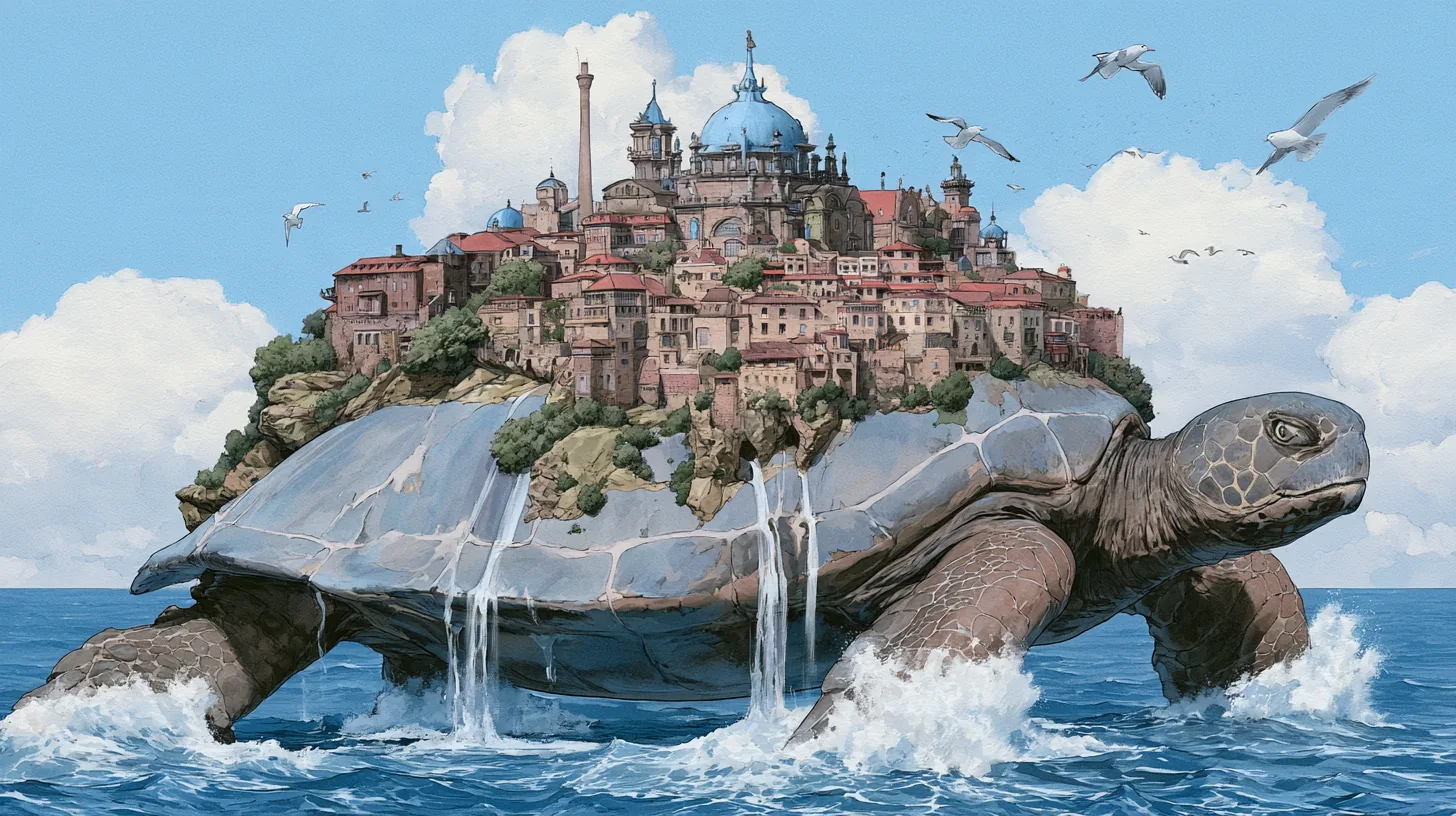
An ancient city on the shell of a giant turtle walking across the ocean, waterfalls pouring off the edges of the shell, seagulls, morning, watercolour concept art --ar 16:9 --stylize 600 --weird 250What you get: a fairy-tale panorama in watercolour. Why it works: --weird 250 nudges the city toward unusual architecture without breaking the readability of the turtle.
24. Alchemist's laboratory.
 Midjourney V7
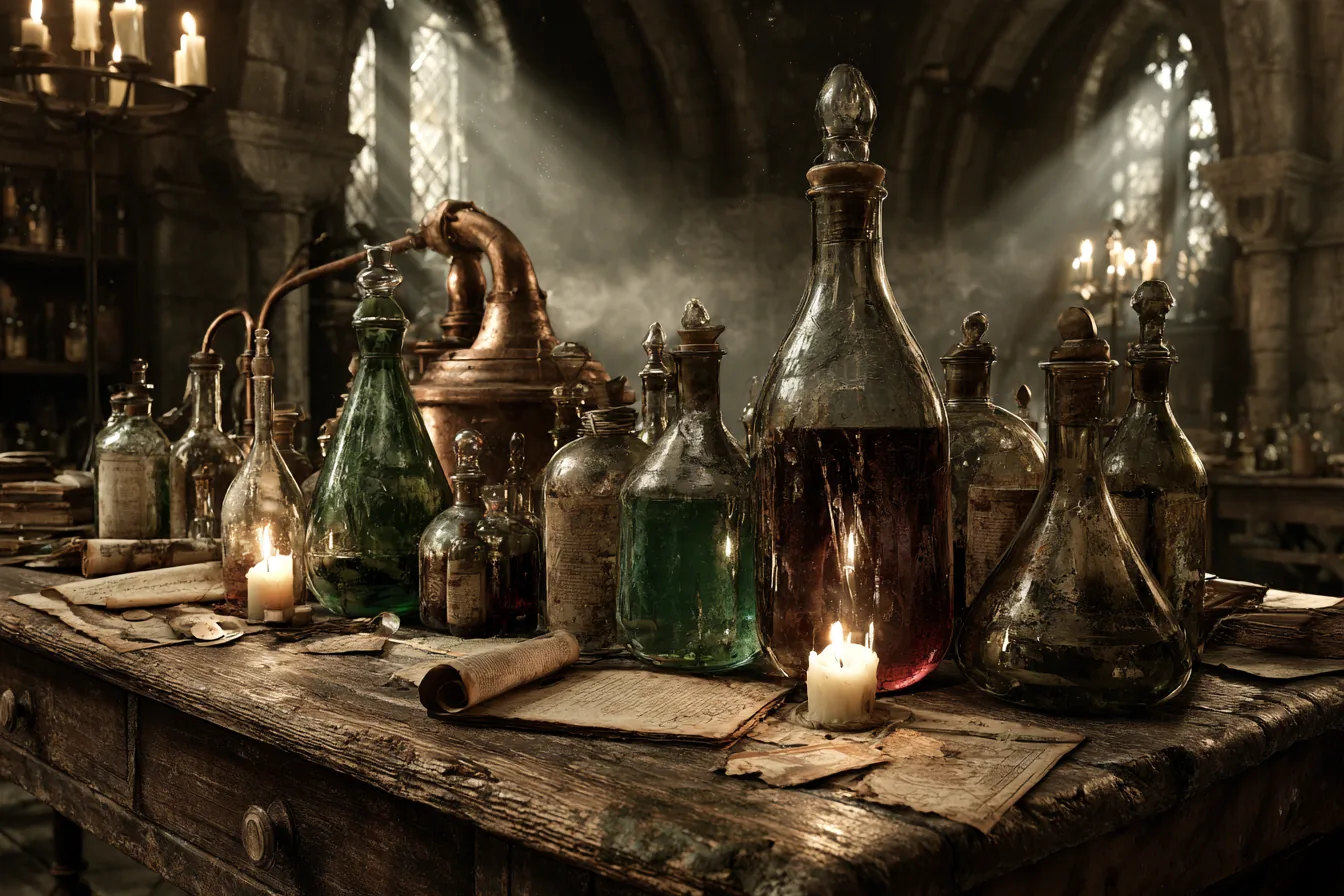
An alchemist's laboratory by candlelight, glass flasks with coloured liquids, scrolls, a copper apparatus, dust in beams of light, detailed environment concept art --ar 3:2 --stylize 400What you get: a worked-out environment for a game or a tabletop. Why it works: objects are listed, not atmosphere; "dust in beams" adds the volume the model loves to draw.
25. Character portrait.
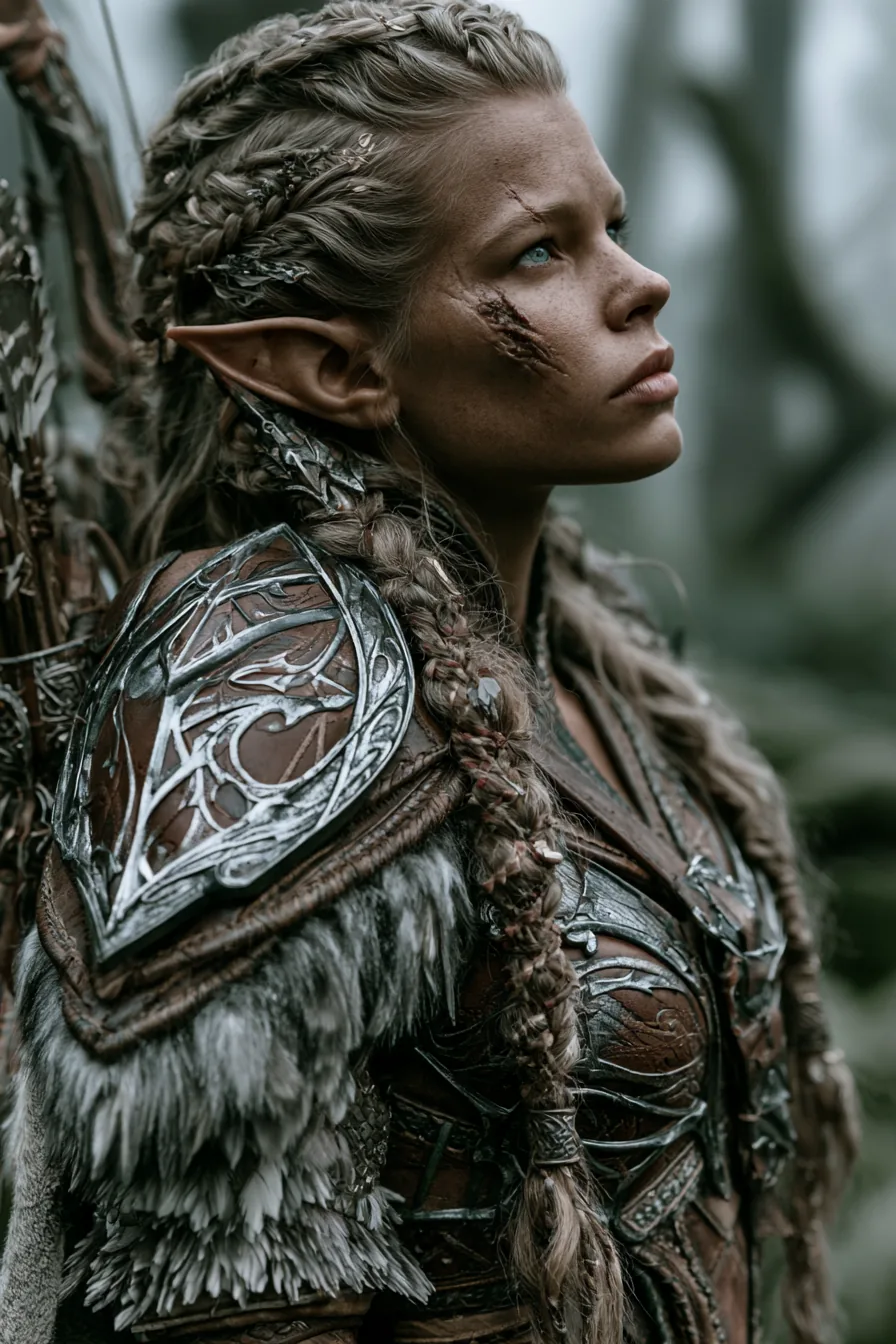 Midjourney V8.1
Portrait of an elven archer in leather armour with silver patterns, a scar on the cheek, calm gaze, misty forest in the background, game character concept --ar 2:3 --stylize 500 --rawWhat you get: a character sheet with readable costume details. Why it works: --raw at high stylization is a compromise: the genre aesthetic stays, but the armour and face do not dissolve into decoration.
Sci-fi and cyberpunk
26. Megacity in the rain.
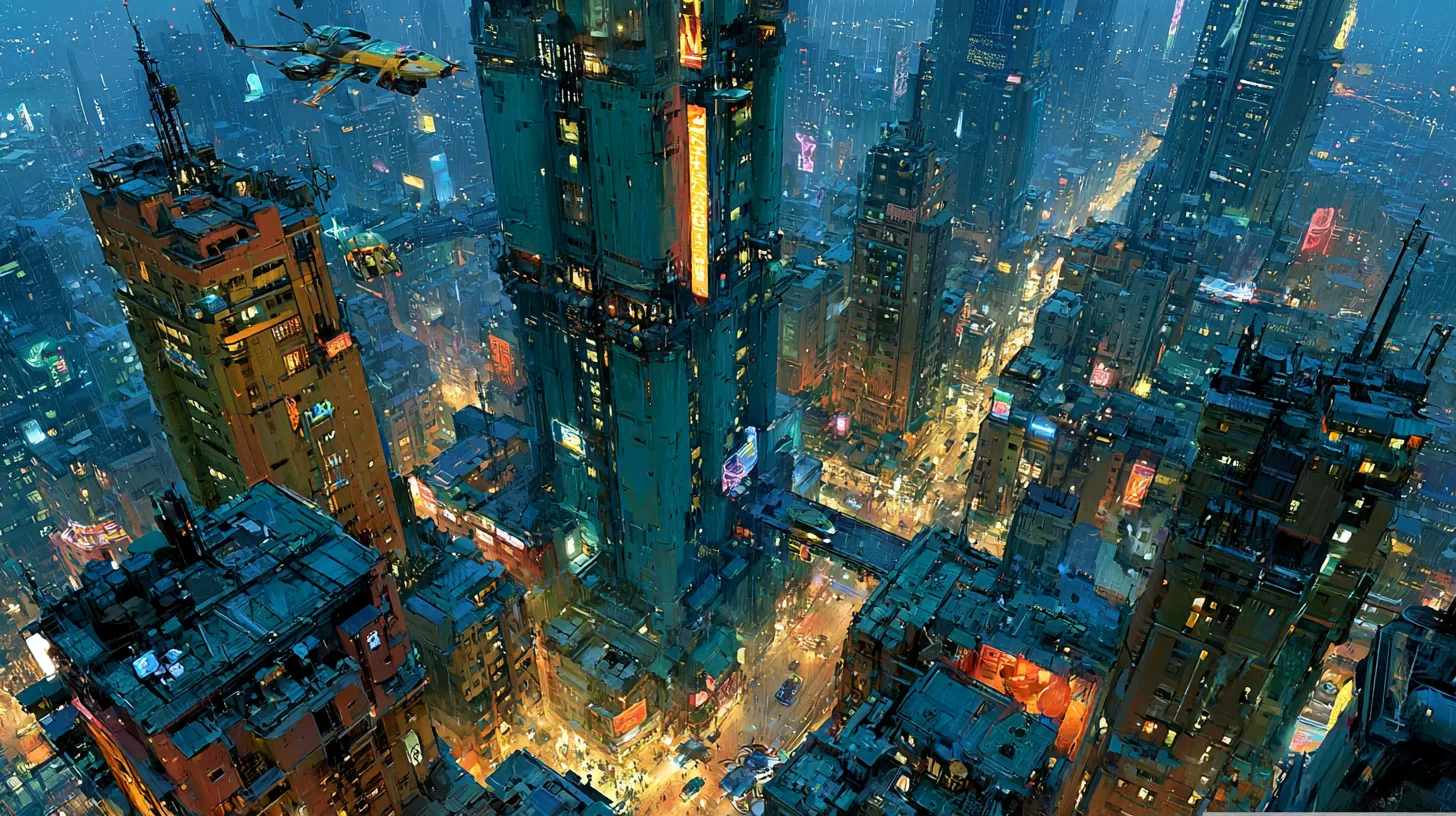 Midjourney V8.1
Cyberpunk megacity at night from a bird's-eye view, rain, neon signs, flying cars between skyscrapers, holograms, noir atmosphere --ar 16:9 --stylize 400 --chaos 15What you get: the classic night megacity. Why it works: "bird's-eye view" fixes the angle; otherwise the model picks street level and loses the scale.
27. Astronaut and a ringed planet.
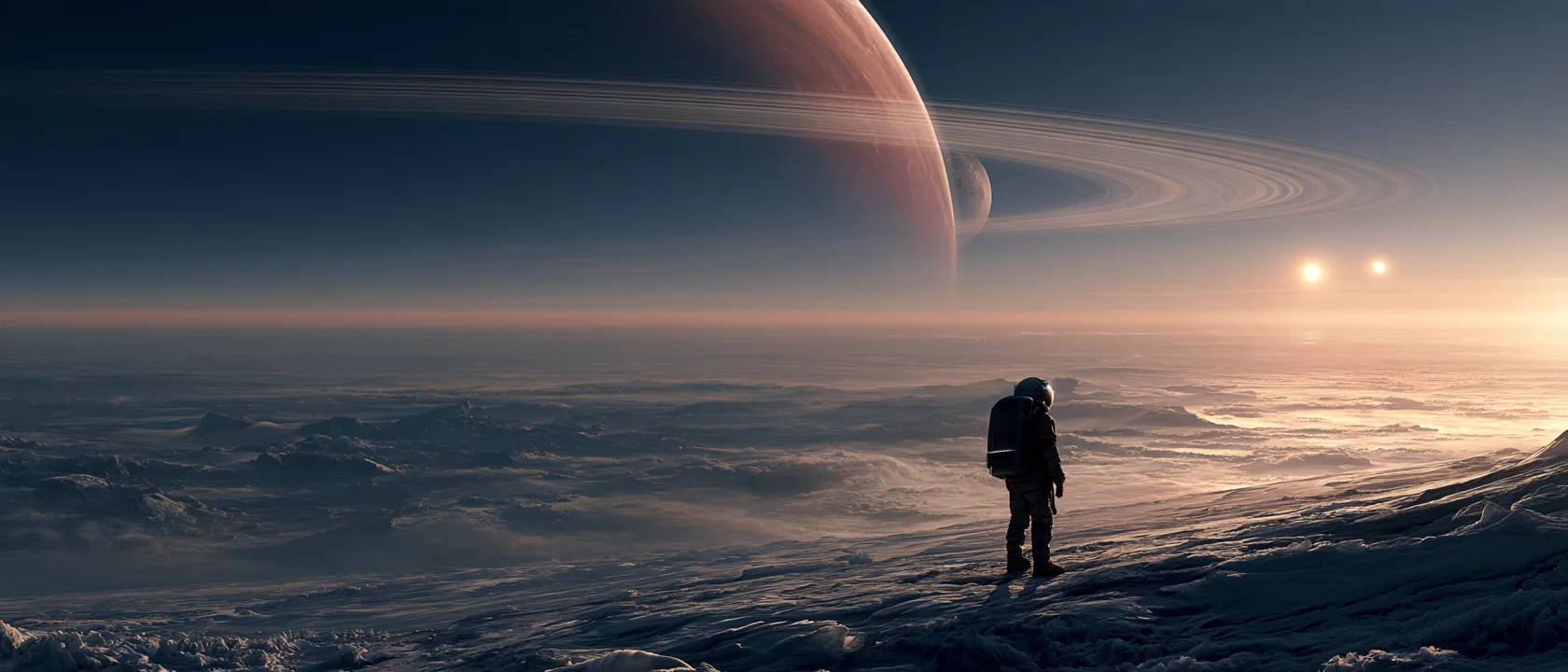 Midjourney V8.1
An astronaut stands on an icy plain, a huge ringed planet above the horizon, two suns, thin atmosphere, realistic space photography --ar 21:9 --stylize 200 --rawWhat you get: a wide cinematic frame. Why it works: the 21:9 format reads as cinema by itself; it exists only in Midjourney V8.1, so take 16:9 for V7.
28. Abandoned station.
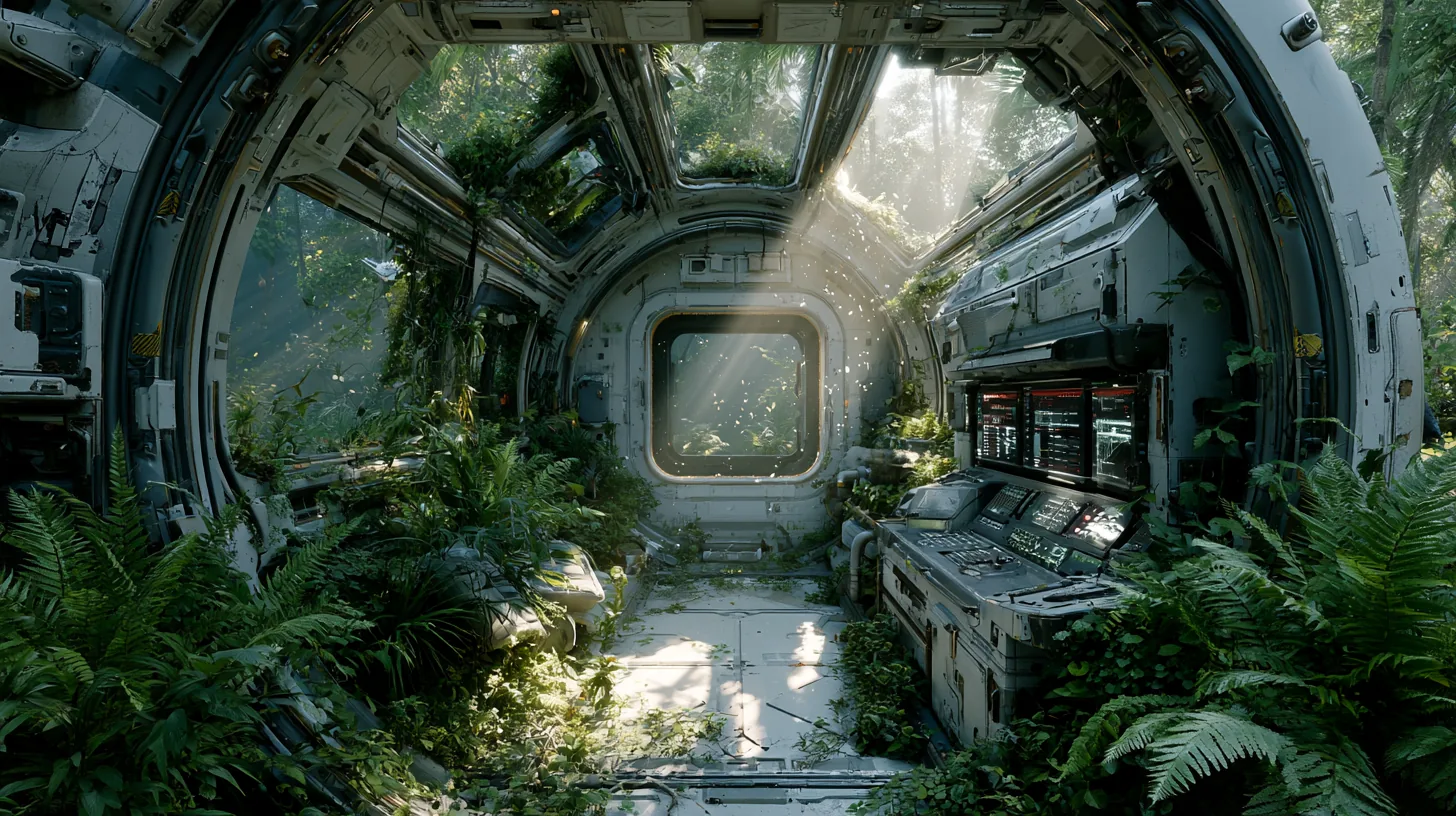 Midjourney V8.1
An abandoned orbital station, plants have grown through the broken portholes, weightlessness, dust in sunbeams, silence, cinematic frame --ar 16:9 --stylize 350What you get: a melancholic scene contrasting metal and greenery. Why it works: plants in space is a conflict the model gladly plays out; "weightlessness" makes it lift small objects into the air.
29. Android close-up.
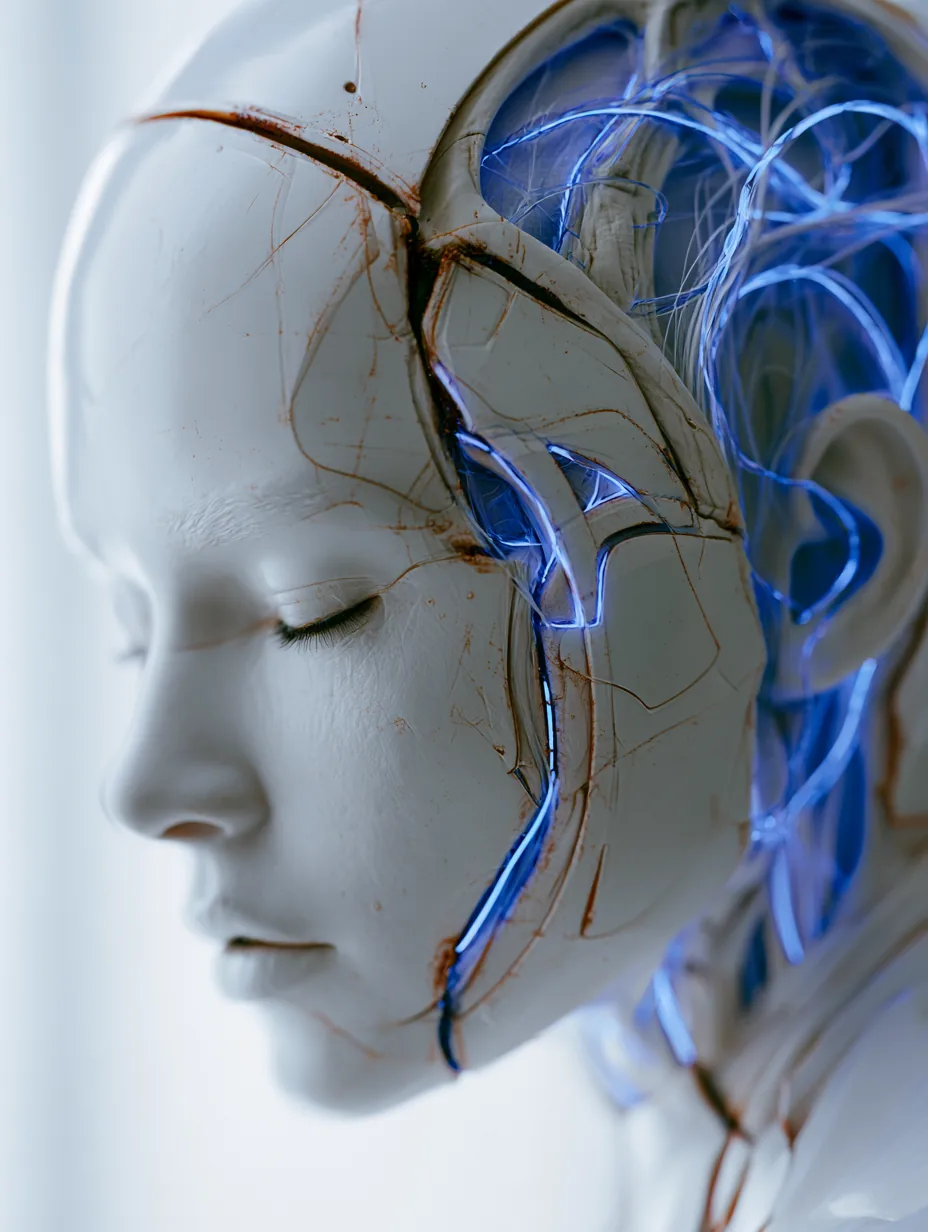 Midjourney V8.1
Close-up portrait of an android with a porcelain face and visible seams, glowing blue lines under the skin, minimalist white laboratory, soft light --ar 3:4 --stylize 250What you get: a clean, almost advertising portrait of an android. Why it works: porcelain and seams are given as materials, not as "robot", so the face comes out human and strange at once.
30. Retrofuturism on Mars.
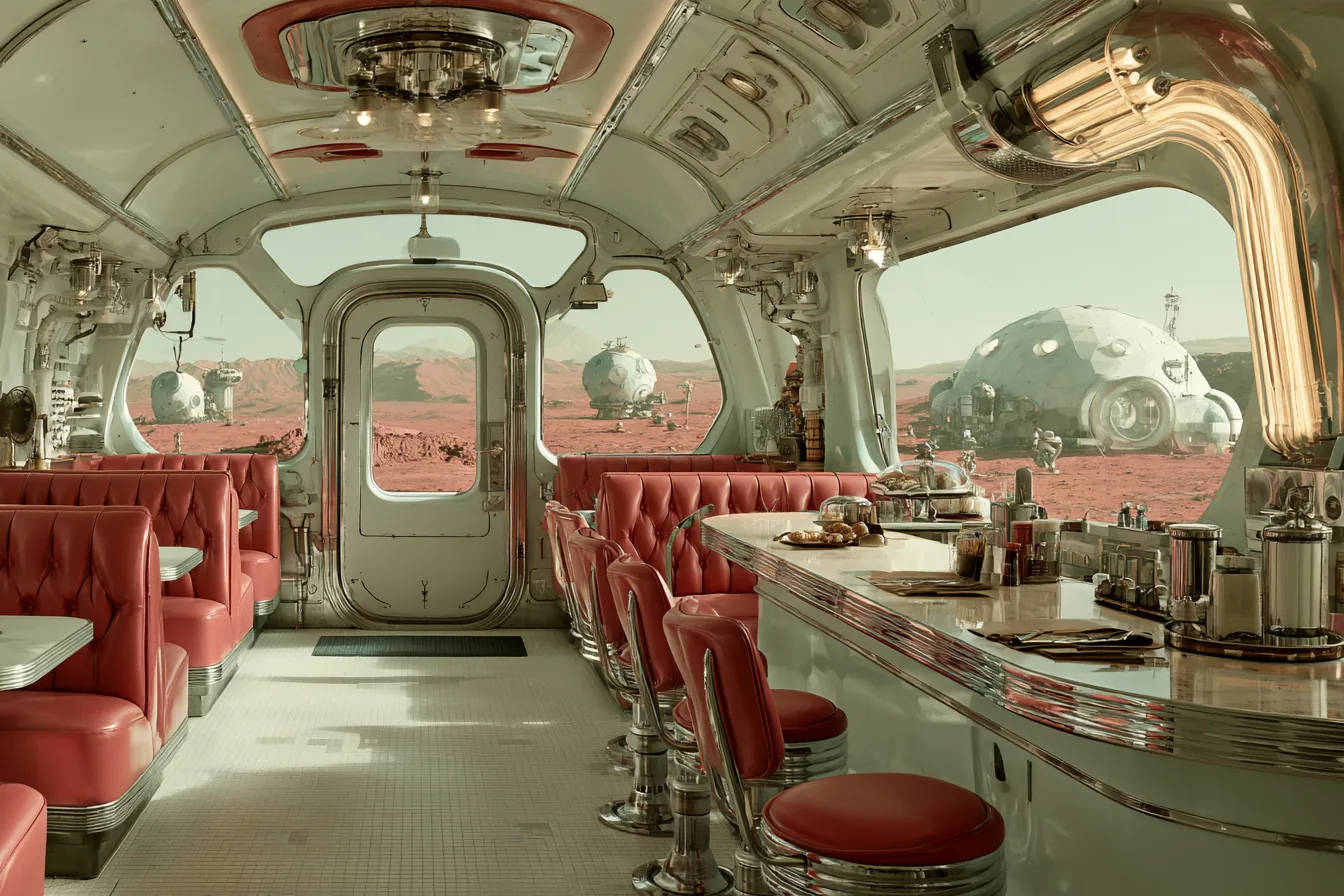 Midjourney V8.1
A retro-futuristic 1960s diner on Mars, chrome details, red vinyl booths, red desert and a colony dome through the window, warm tube-lamp aesthetic --ar 3:2 --stylize 450What you get: a cosy retro scene with an alien planet outside. Why it works: the era is named precisely, 1960s, chrome, vinyl, and the model takes a ready visual vocabulary instead of inventing one.
Illustration and stylisation
31. Flat vector illustration.
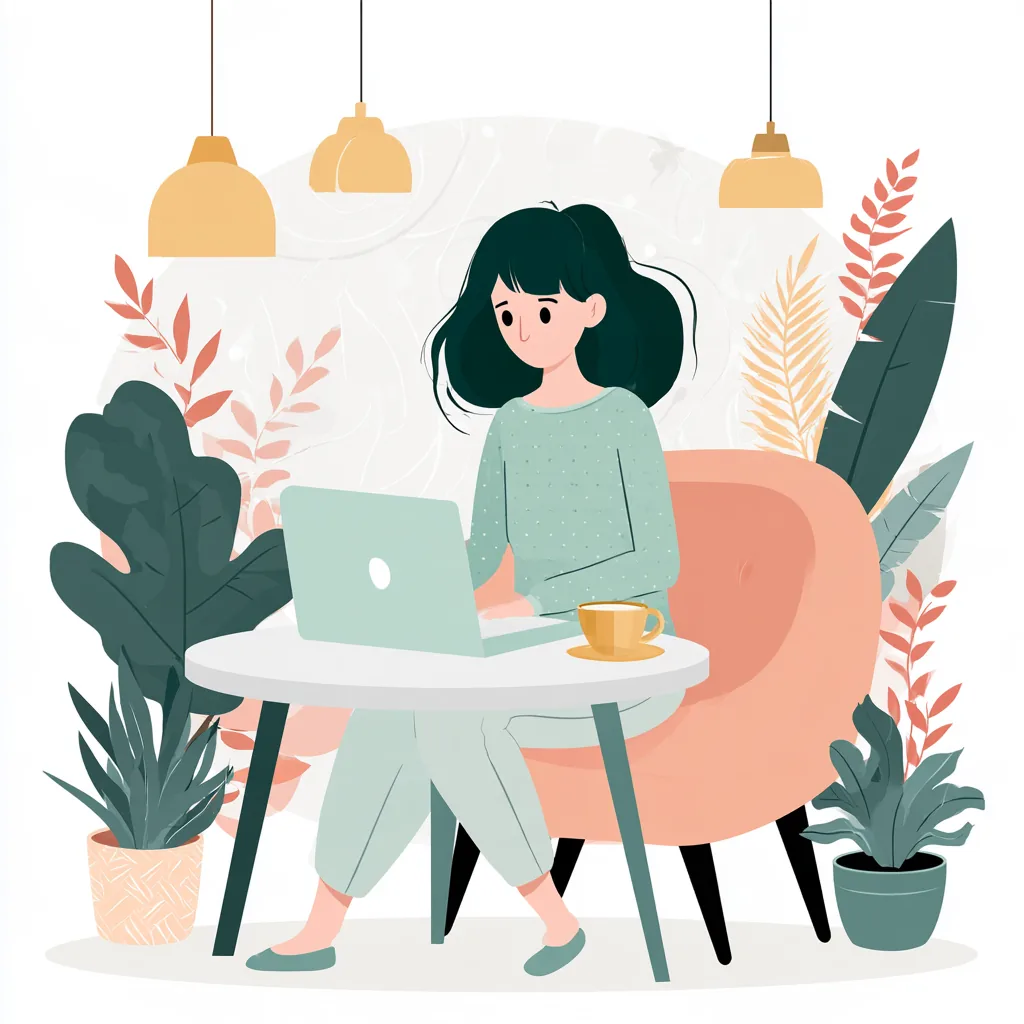 Midjourney V8.1
Flat vector illustration: a young woman with a laptop in a café, simplified shapes, limited palette of four colours, no outlines, modern web design style --ar 1:1 --stylize 100 --no gradients, shadowsWhat you get: an illustration for a landing page or a presentation. Why it works: "palette of four colours" and --no gradients, shadows keep the model in flat style; without them it adds volume.
32. Anime-style frame.
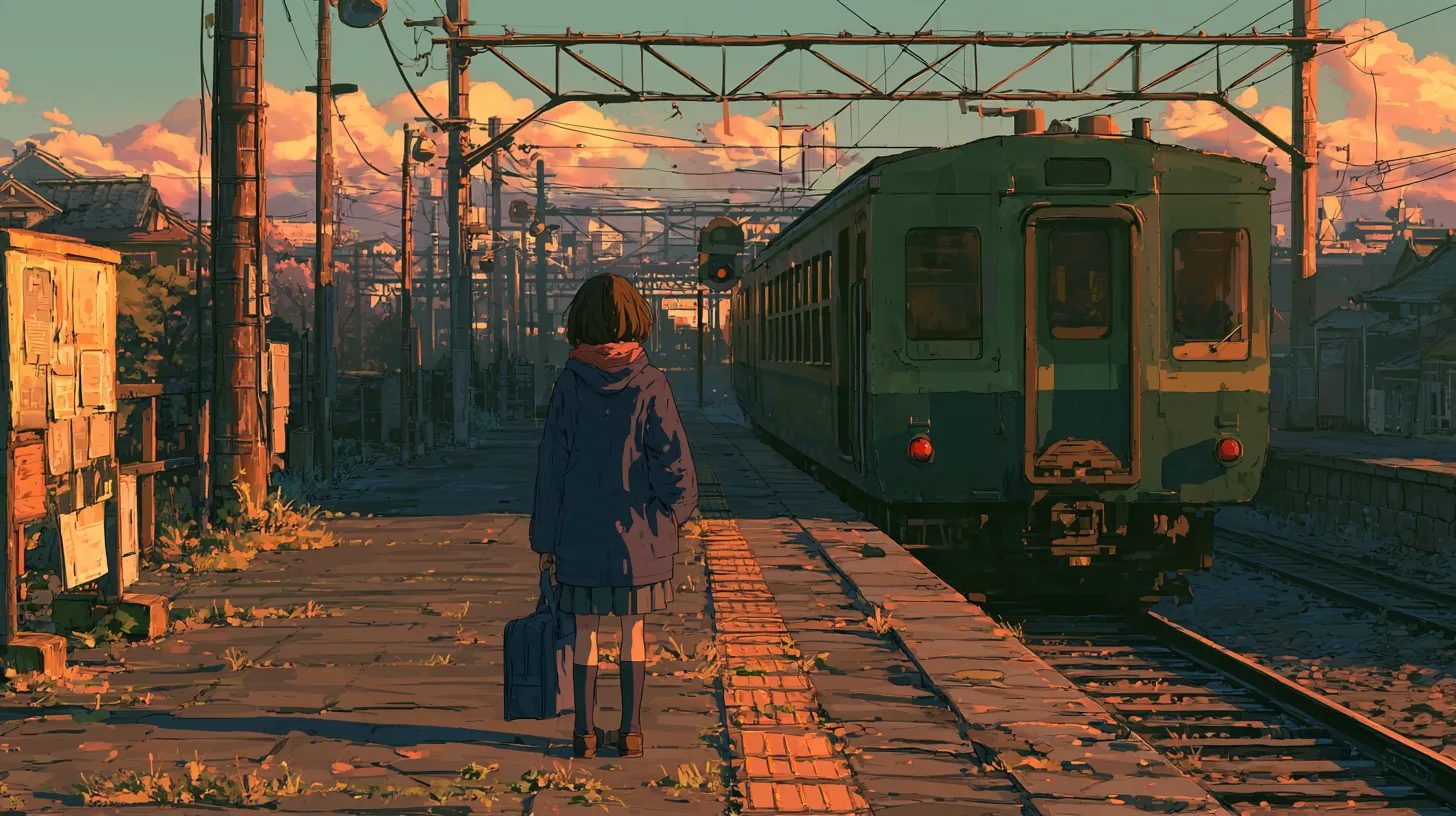 Midjourney V8.1
Anime-style frame: a schoolgirl waits for a train on the platform, evening, soft sunset light, detailed background, cinematic composition --ar 16:9 --stylize 300What you get: an atmospheric "film still" with a worked-out background. Why it works: "detailed background" has to be stated: in anime stylisation the model tends to simplify everything except the character.
33. Children's book illustration.
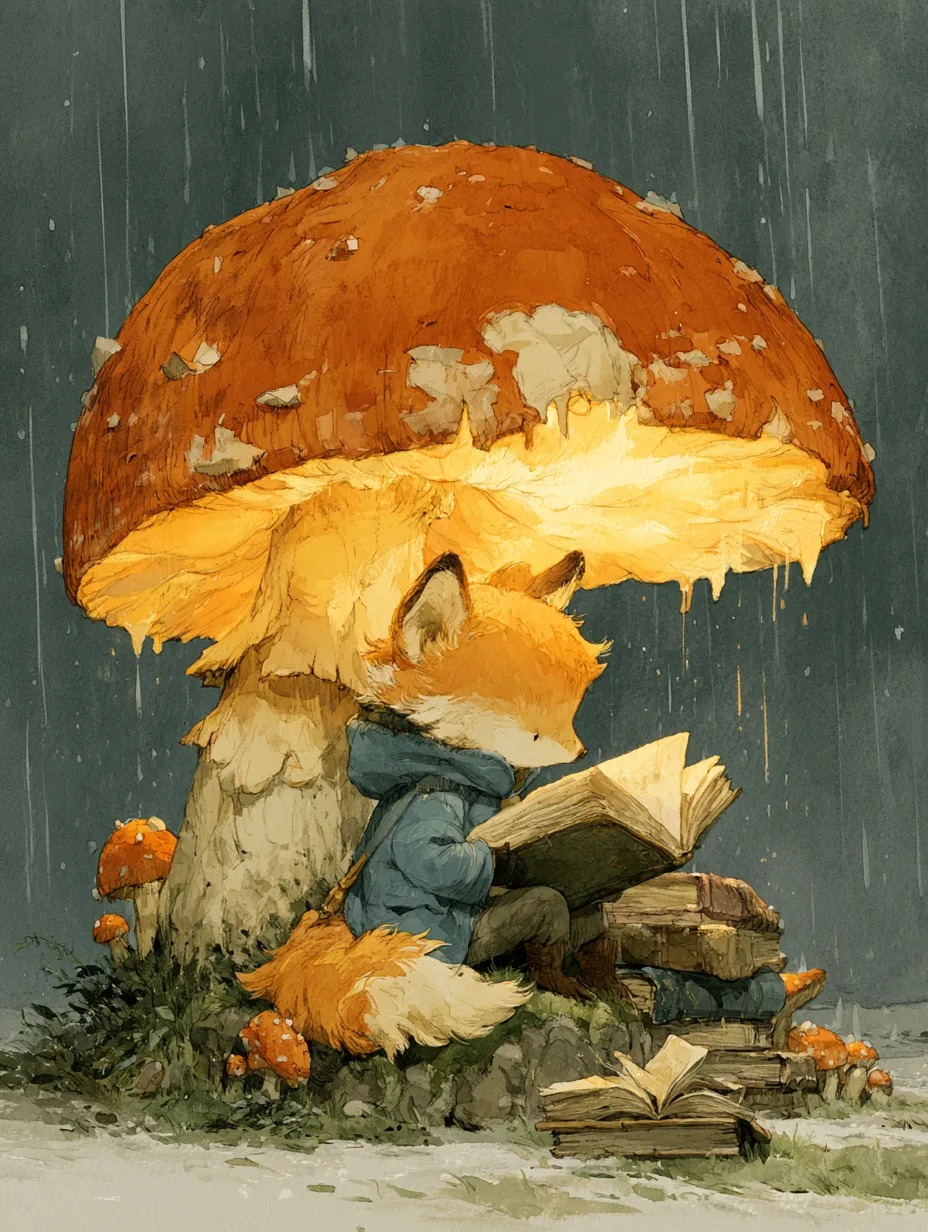 Midjourney V7
Children's book illustration: a fox cub reads a book under a big mushroom in the rain, watercolour and pencil, warm colours, kind atmosphere --ar 3:4 --stylize 500What you get: a children's book spread. Why it works: two techniques are named, watercolour and pencil, and the model mixes wash with line the way real book illustration does.
34. Linocut.
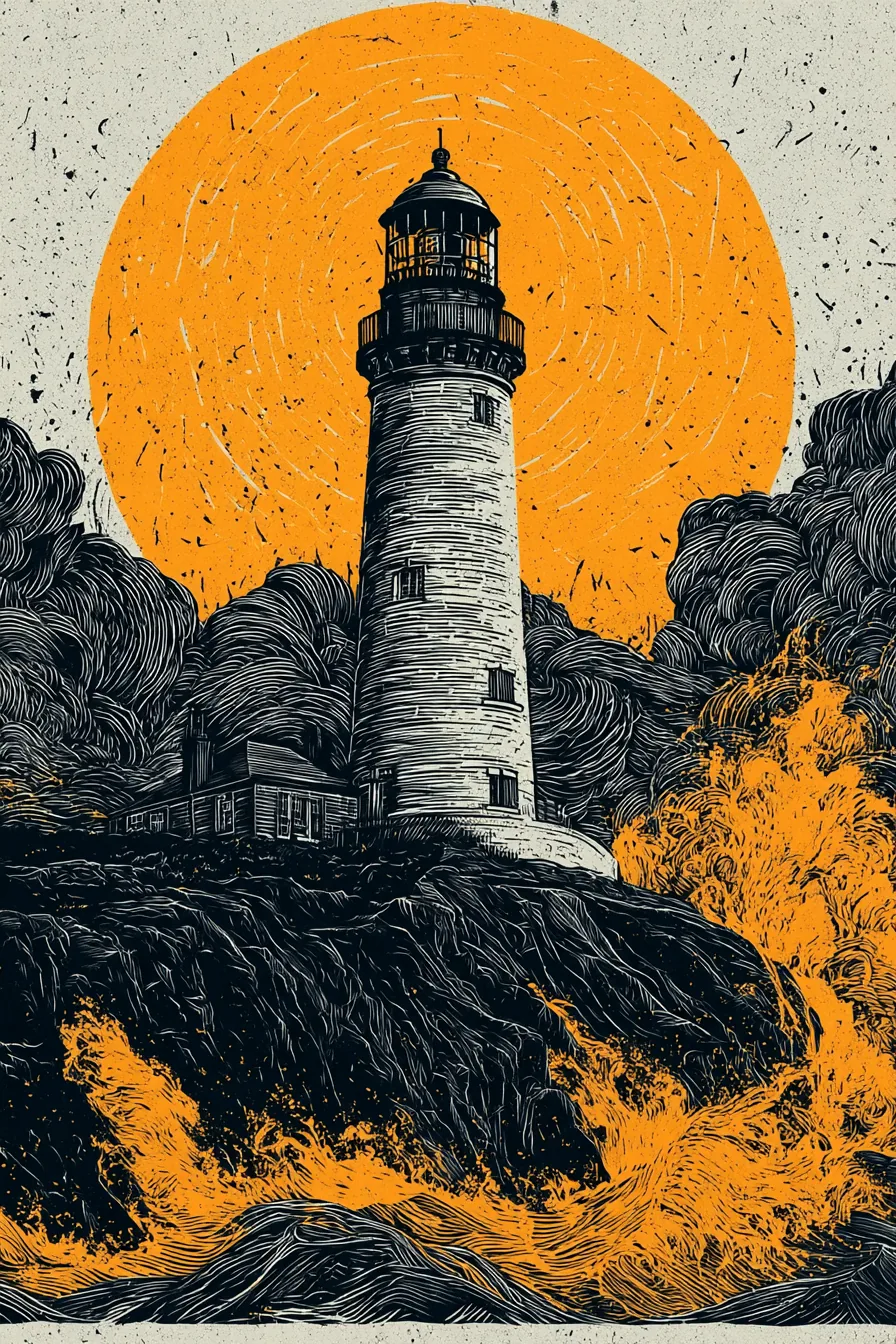 Midjourney V7
Linocut print: a lighthouse on a cliff in a storm, thick black lines, two colours only, black and ochre, paper texture, hand-printed --ar 2:3 --stylize 400 --rawWhat you get: a graphic print for a poster. Why it works: the two-colour limit is the strongest instruction in the prompt; --raw keeps the model from adding a third "for beauty".
35. Paper collage.
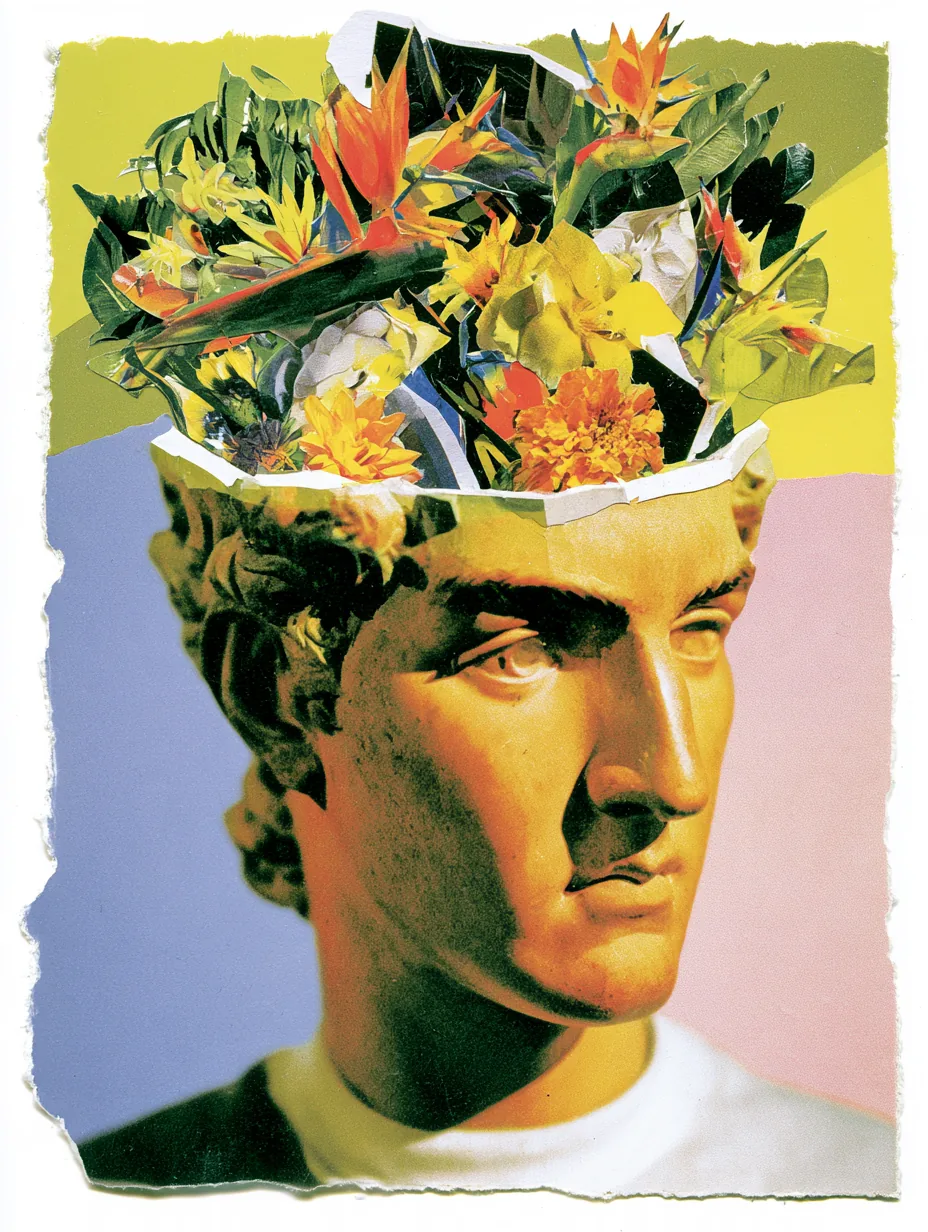 Midjourney V7
Surreal paper collage: the head of an antique statue with tropical flowers growing out of it, cut-outs from old magazines, torn edges, pastel background --ar 3:4 --stylize 600 --weird 500What you get: a playlist cover or a magazine illustration. Why it works: --weird 500 is appropriate precisely in collage: strangeness here is the genre norm, not an error.
Food, still life and minimalism
36. Croissant at sunrise.
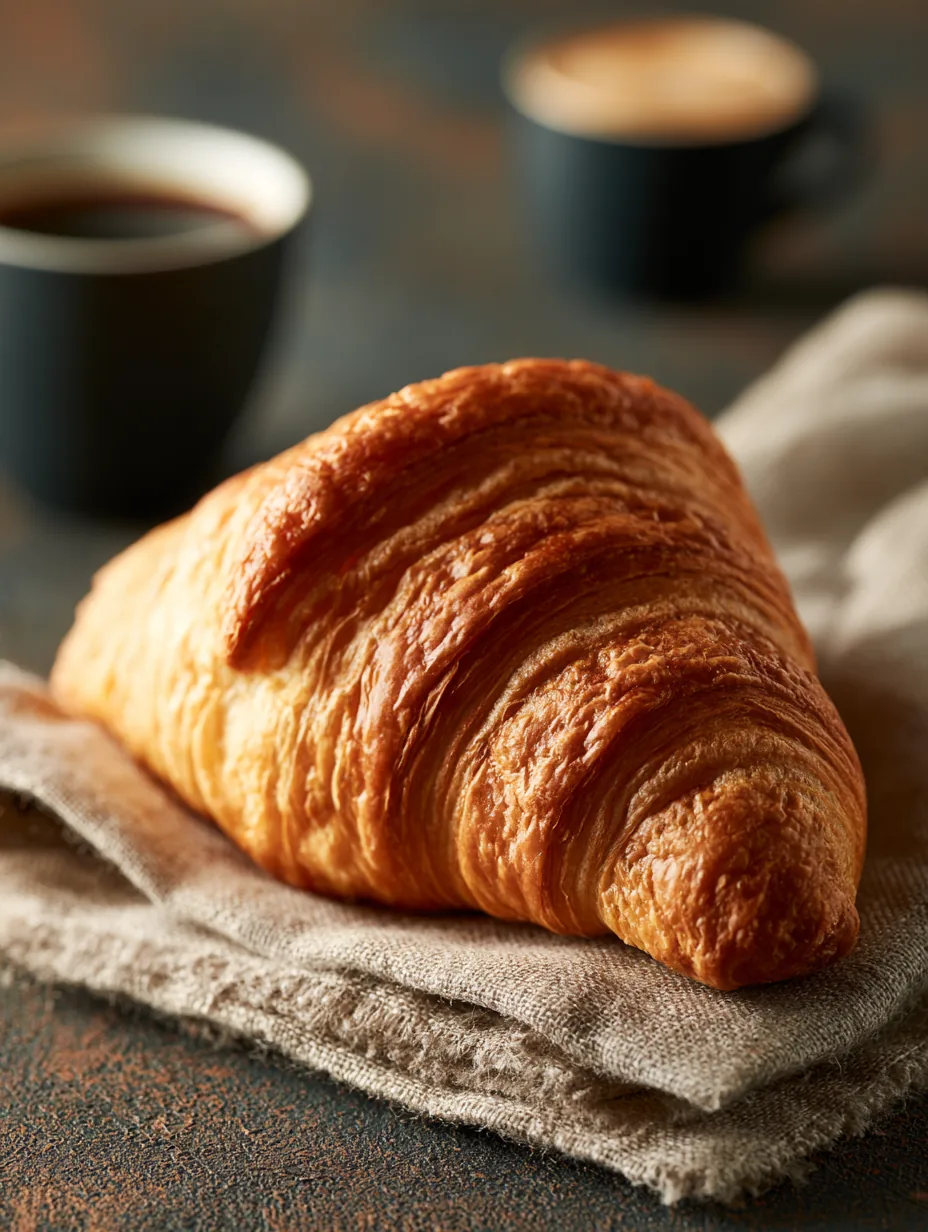 Midjourney V8.1
A fresh croissant on a linen napkin, layered texture in close-up, a cup of coffee out of focus in the background, morning side light, bakery --ar 3:4 --stylize 150 --rawWhat you get: a food shot for a bakery's social media. Why it works: "out of focus" in the background sets depth, and side light brings out the layers of the dough.
37. Dutch still life.
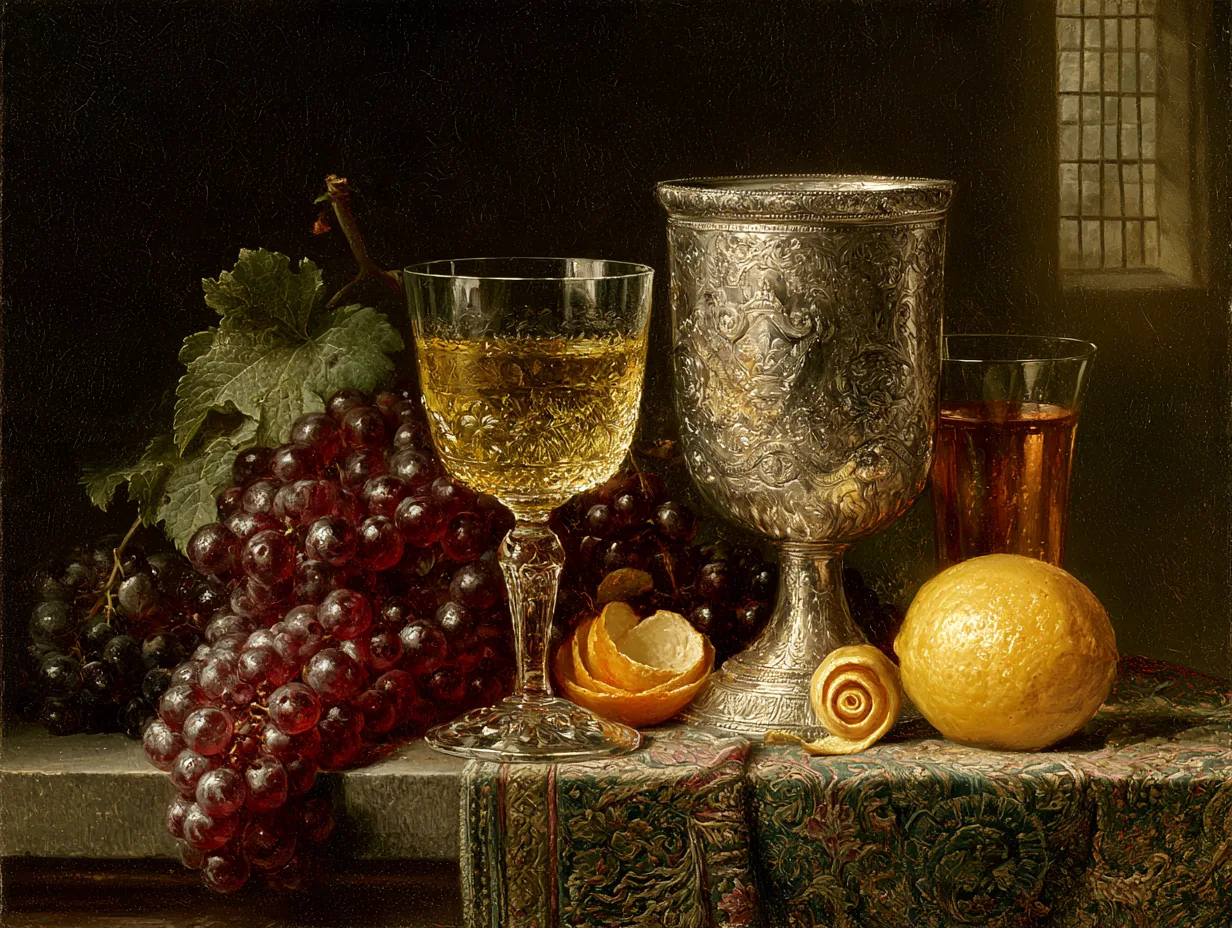 Midjourney V7
Still life in the manner of the Dutch masters: grapes, a silver goblet, a lemon with a spiral peel, dark background, light from a single window, oil --ar 4:3 --stylize 500What you get: a museum-grade still life. Why it works: "a lemon with a spiral peel" is the identifying mark of the genre; from one detail the model reconstructs the whole style.
38. Ramen from above.
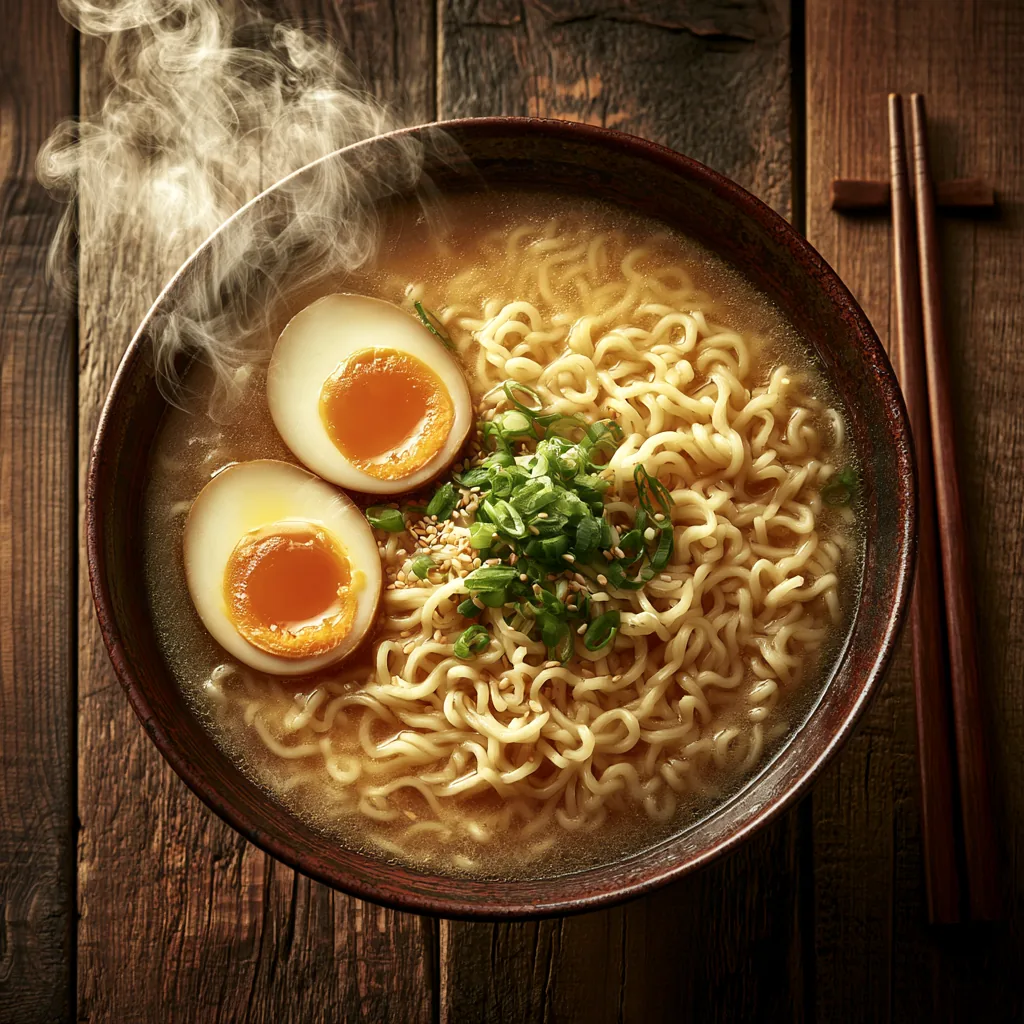 Midjourney V8.1
A bowl of ramen with egg and spring onion, top-down view, steam, wooden table, chopsticks beside it, warm light, menu photography --ar 1:1 --stylize 150What you get: a frame for a menu or a delivery app. Why it works: "top-down view" is the angle where the model almost never gets the proportions of dishes wrong, and steam adds "just cooked".
39. A single object.
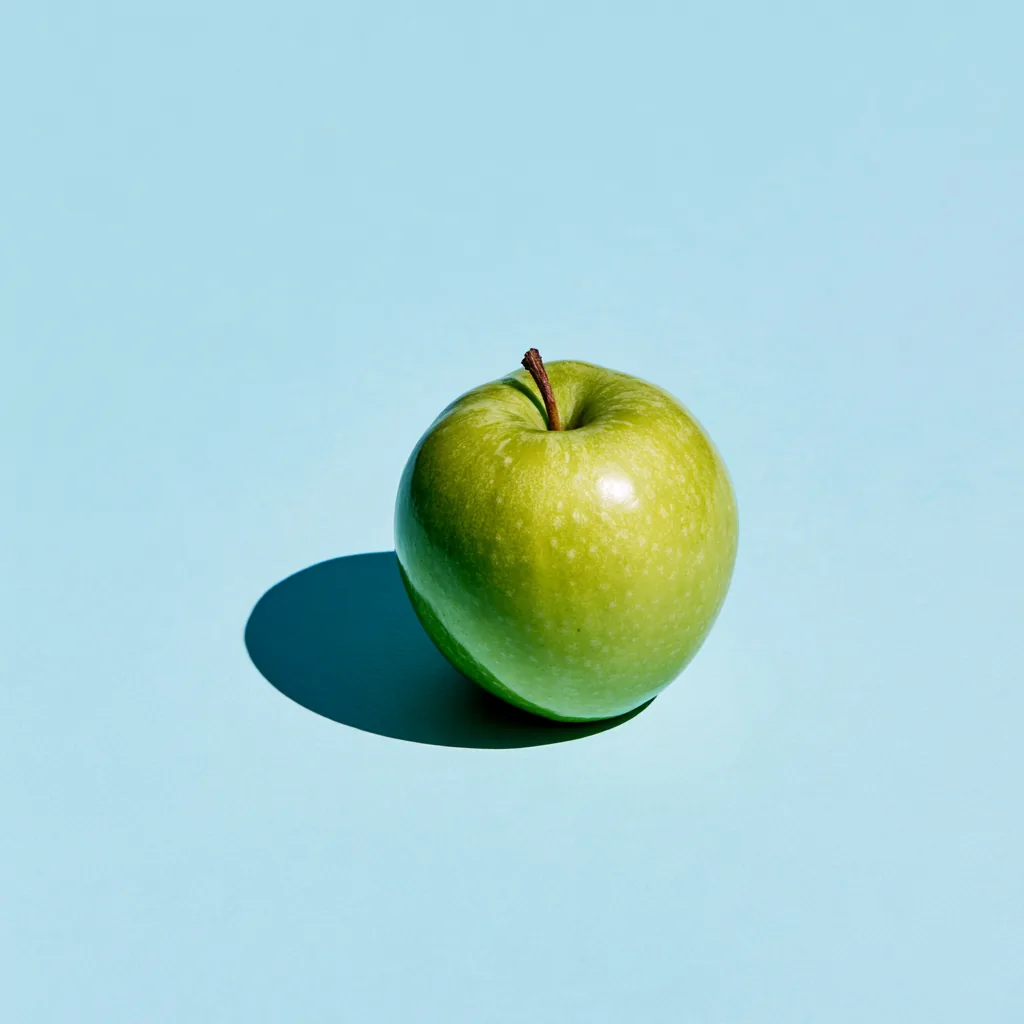 Midjourney V8.1
A single green apple on a pale blue background, hard shadow, nothing else, minimalism, studio photography --ar 1:1 --stylize 50 --rawWhat you get: a clean minimalist frame for a cover or a banner. Why it works: stylization 50 is nearly the minimum; the model will not add a leaf or drops that are not in the text.
40. Botanical pattern.
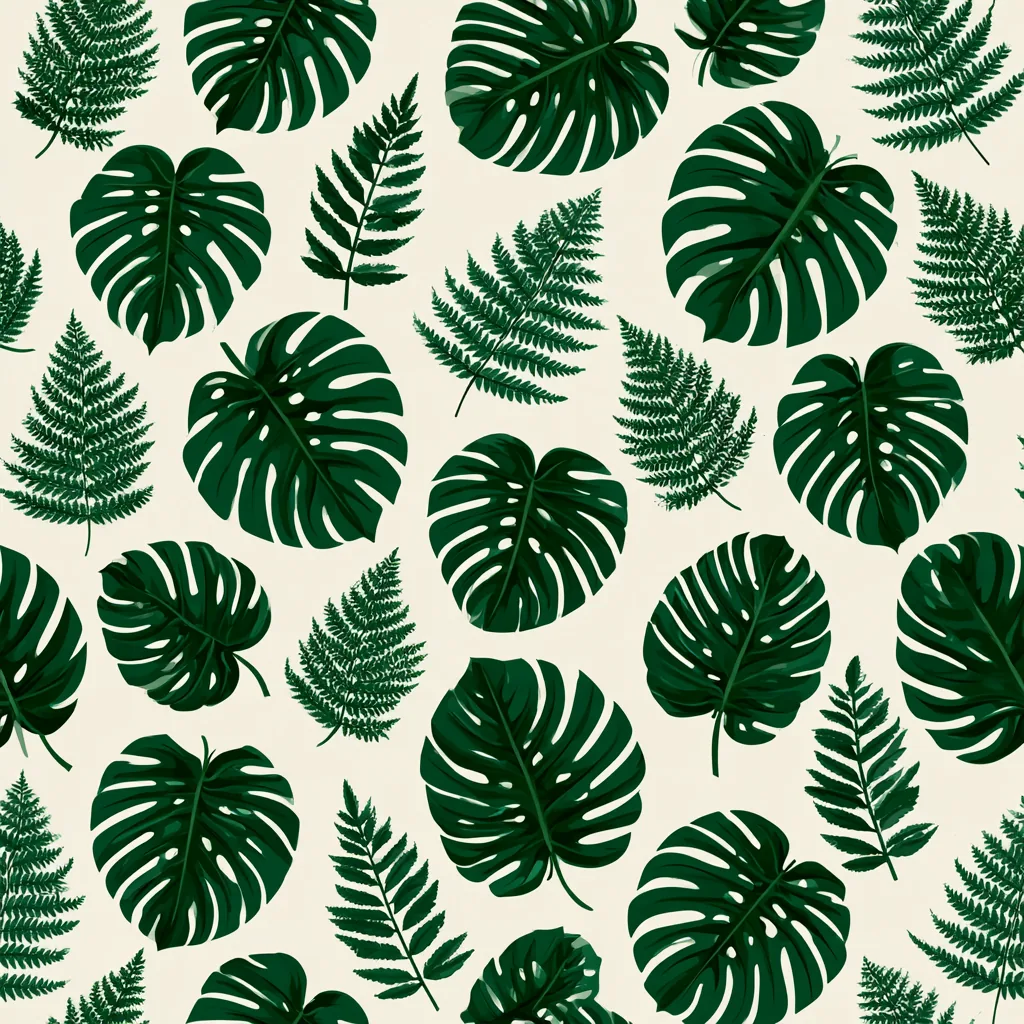 Midjourney V7
Botanical pattern: monstera and fern leaves, dark green on cream, flat illustration, evenly filled repeating pattern for textile --ar 1:1 --stylize 200What you get: a pattern for fabric, wallpaper or a background. Why it works: "evenly filled" stops the model from building a composition with a centre; for a true seamless tile in V7 add --tile.
How to move a prompt into Clipia
On the Midjourney page choose the model version, then the format, which matches --ar from the prompt, and in the advanced settings Stylization, Variety and Weirdness, which are --stylize, --chaos and --weird. For Midjourney V8.1 you also choose the resolution: 1K for 8 credits or 2K for 12 credits; --seed has its own field in V8.1 and goes into the text in V7. Leave --raw and --no in the prompt text. The style reference in V8.1 is set by uploading an image, not by an --sref code: if you have a code from Discord, find the image it was derived from and upload that.
If the image is meant to be the first frame of a video, the catalog has Midjourney Image to Video at 36 credits per clip as of 3 November 2026, without sound. The rest of the image workflow, from the first generation to editing, is in the guide on how to use an AI image generator.
V7 or V8.1: which to choose
- Midjourney V8.1 for everything where text accuracy, captions, 2K resolution and style reference matter. According to Midjourney's release notes, V8 follows the prompt noticeably better than V7 and renders text in quotes. For photorealism the developers recommend
--raw. - Midjourney V7 for painterly genres that need its recognisable look: fantasy, concept art, old-masters portraits. The price is the same, 8 credits, and many authors still prefer its character.
- When in doubt, run the same prompt on both: two runs of 8 credits each buy two sets of variants, cheaper than ten iterations on one model.
Common mistakes
- A wall of adjectives. "Beautiful, detailed, stunning, masterpiece, 8k" adds nothing: the model already draws beautifully. Specifics of light and materials belong in that space.
- Parameters in the middle of the text. Midjourney expects parameters at the very end: its help lists text after a parameter as a mistake. Description first, parameters at the end.
- Stylization 1000 for products. At the maximum the model redraws the shape of the product. For goods, 50–200 and
--raw. - Negations in words. "Without people" in the text works worse than
--no people: the model may read "people" as an object to draw. - One generation and a verdict. Four variants per request is the way Midjourney is meant to be used: pick the best, refine the prompt, repeat. A single run rarely gives the final.
How we checked
The collection was assembled on 29 October 2026 and checked again on 3 November 2026. Parameter ranges and behaviour were checked against Midjourney's official release notes from March to July 2026 (V8 Alpha, V8.1, V8.1 as default, V8.2) and against the Midjourney Help Center articles on parameters and versions. Prices and model settings in Clipia, formats, resolutions, the style reference, were taken from the Clipia catalog and cost calculator on 3 November 2026. On the same day all 40 prompts were run in Clipia exactly as printed, with the same values in the panel: Midjourney V8.1 at 1K for photography, interiors and products, Midjourney V7 for painterly genres, one run of four variants each. The examples are the best variant of each run, chosen by the editor and not retouched. After the first run prompt 8 was changed: the model drew the "dead tree" with leaves.
FAQ
Do Midjourney prompts have to be in English?
No, the model accepts other languages, but it was trained mostly on English captions, so complex style instructions are more precise in English. The practical rule: write in the language you are comfortable in, translate the description when the result drifts, and never touch the parameters.
What does --stylize do and which value should I set?
The parameter from 0 to 1000 (default 100) controls how much of its own aesthetic the model adds on top of the text. 50–150 follows the description literally and suits products and documentary photography; 300–500 is the balance for most tasks; 700–1000 is painting and concept art, where beauty matters more than precision.
How is Midjourney V8.1 different from V7?
According to Midjourney's release notes, V8.1 follows the prompt more closely, renders text in quotes and gives around 2K resolution in HD mode; it was Midjourney's default from June to July 2026, and since 24 July the default is V8.2. V7 keeps a more pronounced artistic look. In Clipia as of 3 November 2026 both cost 8 credits per generation, V8.1 at 2K costs 12 credits.
How do I use a style reference in Clipia?
Midjourney V8.1 has a reference image upload in the panel: the model repeats its style, palette, technique, mood, but not its content. It replaces the --sref parameter with a code.
How do I get a series of images in one style?
Three techniques together: the same style description at the end of every prompt, one style reference for the whole series and a fixed --seed. The seed locks the compositional "skeleton", the reference locks palette and technique. Change only the subject at the start of the prompt.
How much does one Midjourney image cost through Clipia?
As of 3 November 2026 a Midjourney V7 generation costs 8 credits, Midjourney V8.1 costs 8 credits at 1K and, at 2K, 12 credits. New accounts get 5 welcome credits on sign-up. Subscriptions with credit packages are on the plans page in your account.
Copy a prompt from the genre you need and launch your first generation on the Midjourney page in Clipia: start with the stylization from the example, then move it 100–200 in the direction you like. For other tasks, the image generation model guide helps choose between the models in the catalog.
Sources
- Midjourney Updates — V8 Alpha: parameters, --raw, --hd, sref and personalization compatibility (17 March 2026)
- Midjourney Updates — V8.1 Updates: SD by default, --hd for HD (30 April 2026)
- Midjourney Updates — V8.1 is now the default model (11 June 2026)
- Midjourney Updates — Version 8.2 (24 July 2026)
- Midjourney Help Center — Parameter List and Style Reference (official documentation)
- Midjourney Help Center — Version: V8.2 is the current default model (since 24 July 2026)
- Clipia — Midjourney: panel settings and generation cost
Try it yourself on Clipia
60+ models for video and image generation. One account, transparent pricing.